

How does e-commerce market expansion begin with market analysis?
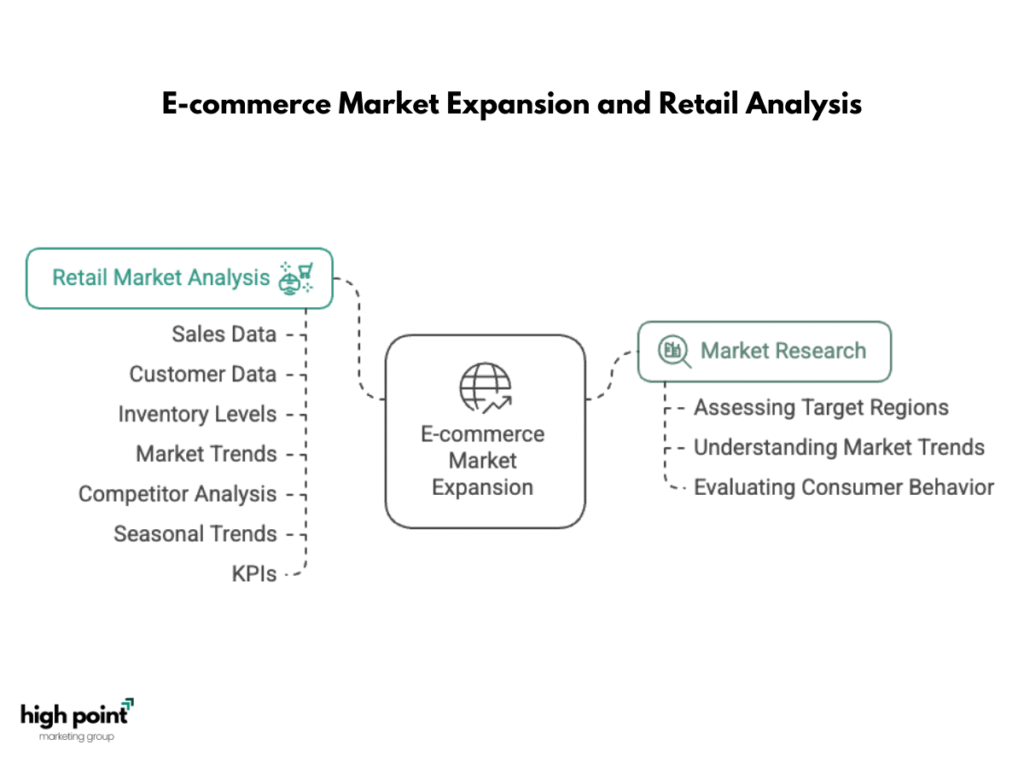
E-commerce market expansion starts with thorough market research. This involves:
- Assessing Target Regions: Analyze demographic, geographic, and sales data to identify potential markets.
- Understanding Market Trends: Identify which products are growing or declining in demand.
- Evaluating Consumer Behavior: Study local consumer preferences to ensure product alignment.
Strategically using this data helps businesses expand into new regions and maximize opportunities. The global e-commerce market is projected to reach USD 83.26 trillion by 2030, highlighting the growth potential through effective market analysis.
What data informs a successful retail market analysis?
Successful retail market analysis relies on a variety of data points, including:
- Sales Data: Key insights are drawn from sales figures to assess product performance.
- Customer Data: Understanding customer demographics, purchasing patterns, and history helps inform pricing strategies and product placement.
- Inventory Levels: Analyzing inventory helps optimize stock management and sales strategies.
- Market Trends: Tracking industry trends enables retailers to anticipate shifts in demand.
- Competitor Analysis: Monitoring competitors’ pricing and promotional activities provides competitive insights.
Retailers should also focus on seasonal trends and sales cycles, which assist in predicting future product demand. KPIs such as conversion rates, click-through rates, and ROI are essential for evaluating overall retail performance. By gathering and analyzing these data points, retailers can refine their strategies and enhance customer experience.
What frameworks guide the analysis of e-commerce market expansion?
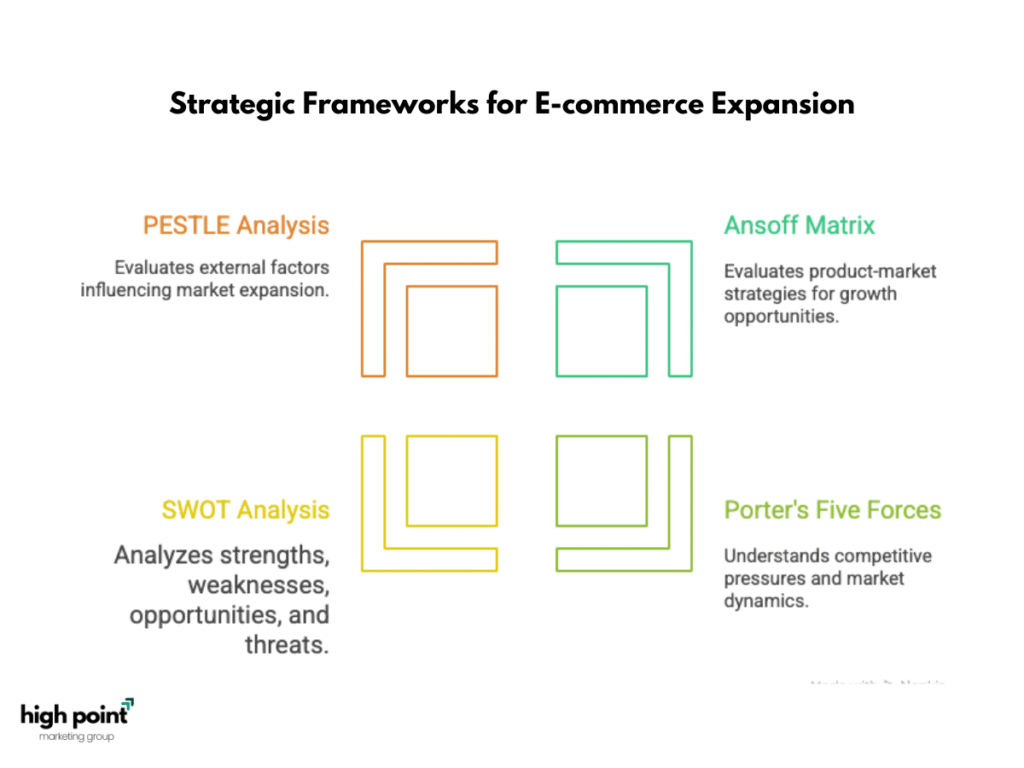
E-commerce market expansion analysis is guided by several strategic frameworks that help businesses assess and make informed decisions:
- Ansoff Matrix: Used to evaluate product-market strategies and identify growth opportunities.
- Porter’s Five Forces: Helps businesses understand competitive pressures and market dynamics.
- SWOT Analysis: Analyzes strengths, weaknesses, opportunities, and threats in new markets.
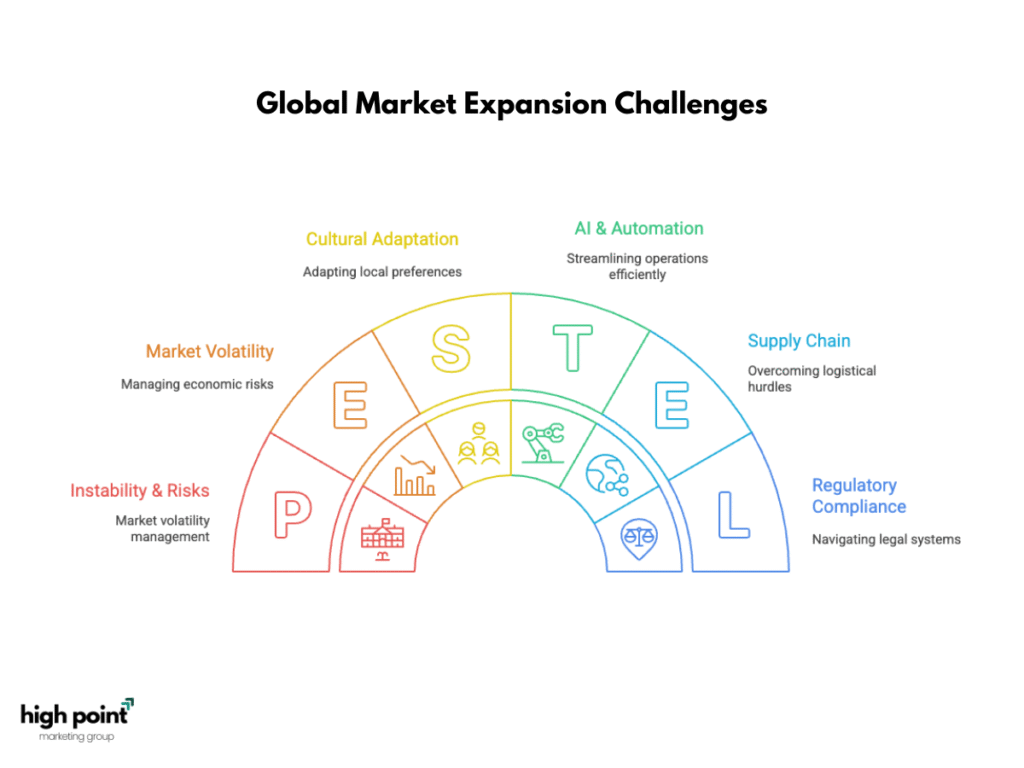
- PESTLE Analysis: Evaluates external factors like political, economic, social, technological, legal, and environmental influences on market expansion.
These frameworks provide structured approaches to evaluate market potential, consumer behavior, competition, and environmental factors, enabling businesses to create actionable strategies for successful market entry and growth.
How does market expansion for retail effectively target new customers?
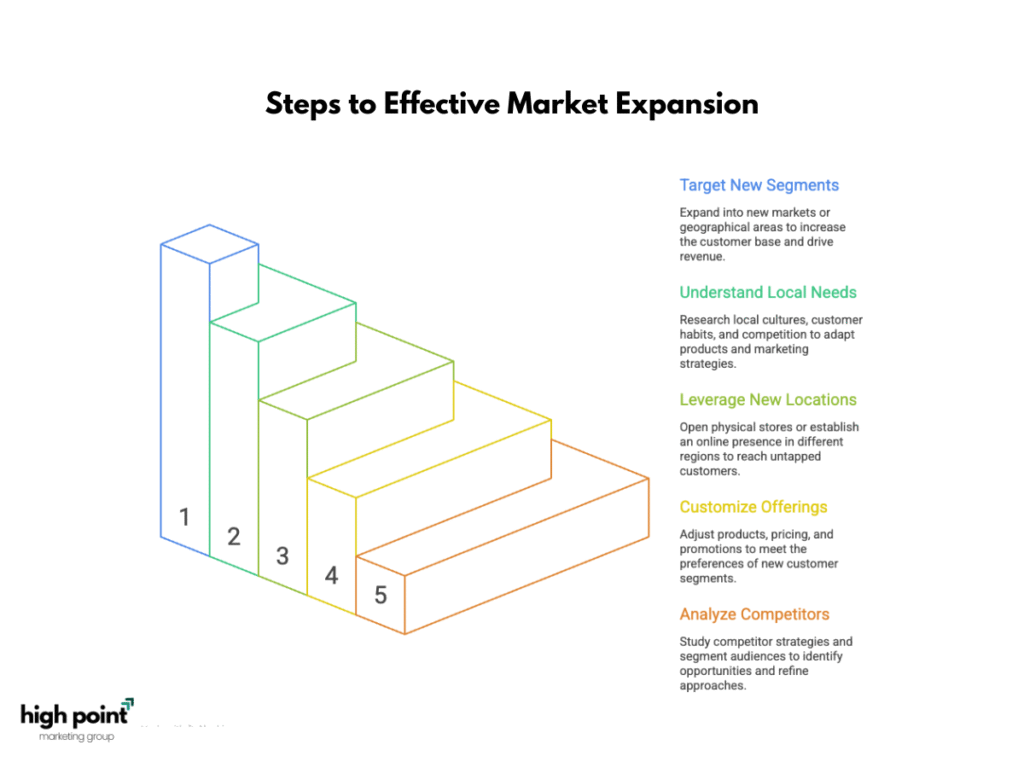
To effectively target new customers through market expansion, retail businesses should:
- Target New Segments: Expand into new markets or geographical areas to increase the customer base and drive revenue.
- Understand Local Needs: Research local cultures, customer habits, and competition to adapt products and marketing strategies.
- Leverage New Locations: Open physical stores or establish an online presence in different regions to reach untapped customers.
- Customize Offerings: Adjust products, pricing, and promotions to meet the preferences of new customer segments.
- Analyze Competitors: Study competitor strategies and segment audiences to identify opportunities and refine approaches.
These strategies help retail businesses expand their reach, attract new customers, and grow their revenue.
Which emerging markets should e-commerce companies prioritize for market expansion?
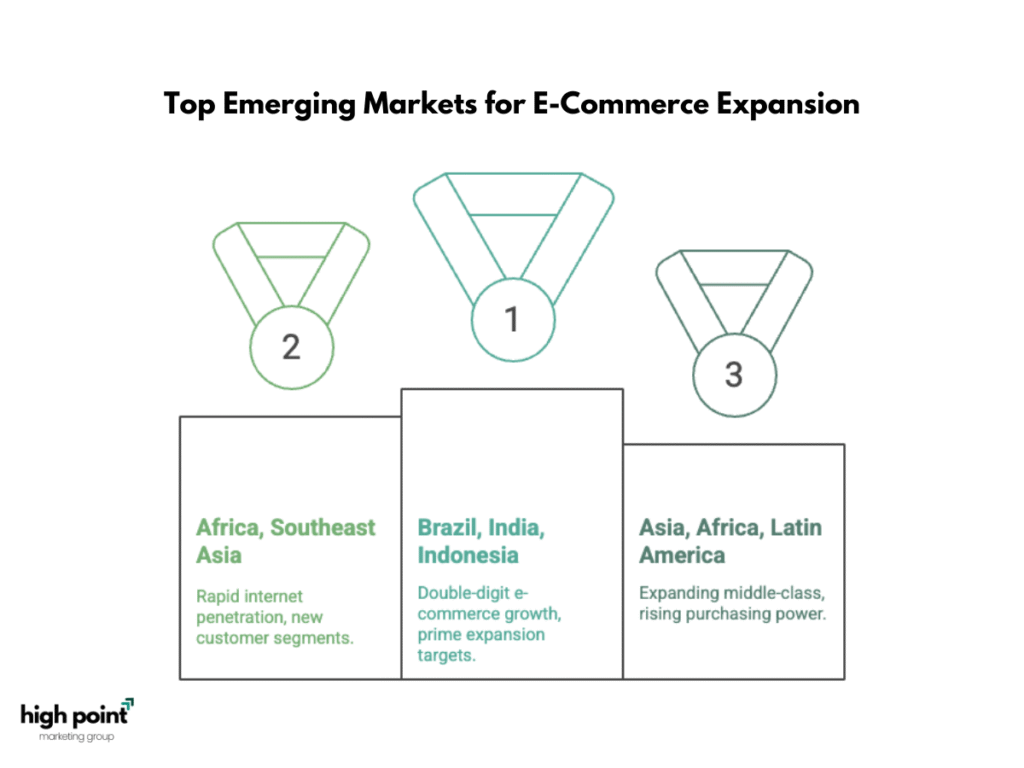
For e-commerce companies looking to expand, focusing on key emerging markets offers significant growth opportunities. Here are the markets to prioritize:
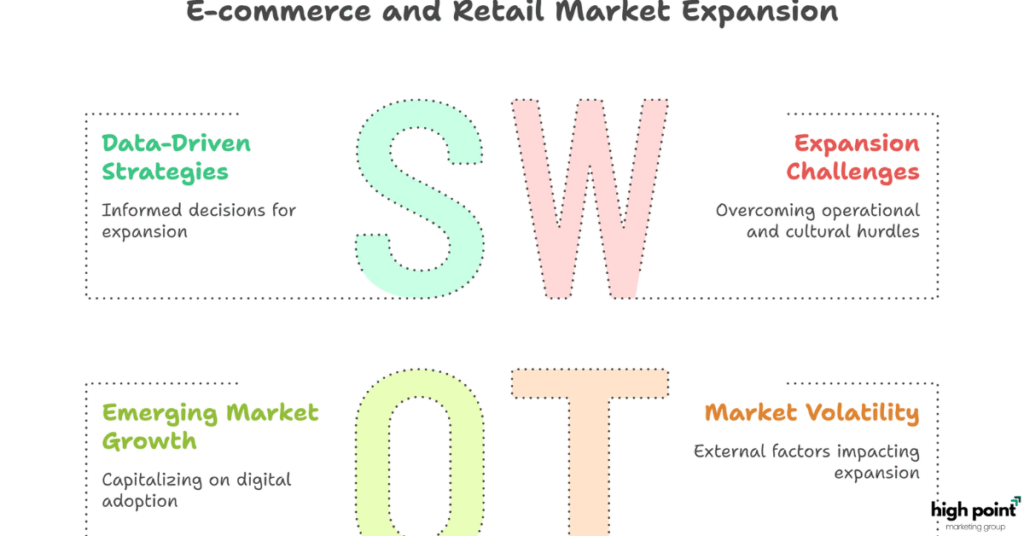
- Brazil, India, and Indonesia: These countries are experiencing double-digit growth in e-commerce adoption, making them prime targets for expansion.
- Africa and Southeast Asia: These regions are witnessing rapid increases in internet penetration, creating new customer segments eager for digital shopping experiences.
- Middle-Class Growth: Markets with expanding middle-class populations, particularly in Asia, Africa, and Latin America, present long-term opportunities due to rising purchasing power.
As emerging markets grow at a faster rate than developed economies (4.5% annually vs. 1.5%), e-commerce companies must localize strategies to succeed. This includes adopting mobile-first approaches, leveraging digital solutions, and tailoring marketing strategies to local consumer behaviors.
How does market expansion leverage social commerce for customer targeting?
Social commerce merges e-commerce with social media, allowing businesses to expand their reach by engaging with large user bases on platforms like Instagram, TikTok, and Facebook. It enables hyper-targeted advertising, improving customer targeting through specific demographics and behaviors.
Key advantages include:
- Direct Engagement: Real-time interactions with customers boost conversion rates.
- Personalization: Customer data allows for tailored marketing efforts for better targeting.
- Social Proof: Reviews and feedback help build trust and credibility.
By integrating shopping features directly into social media, social commerce supports market expansion and drives repeat purchases.
What is the role of an omnichannel strategy in targeting market expansion?
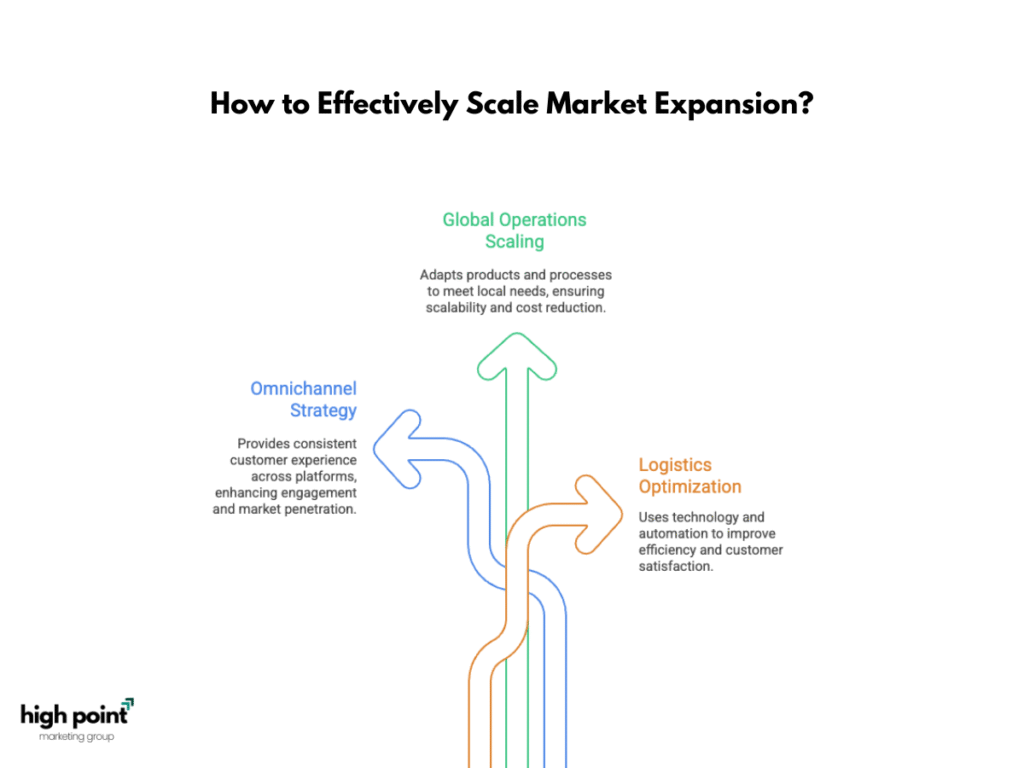
An omnichannel strategy helps businesses expand by providing a consistent, seamless experience across multiple platforms. Key benefits include:
- Wider Reach: Synchronizes messaging across online and offline channels.
- Increased Engagement: Drives customer interaction with consistent, targeted content.
- Market Penetration: Facilitates entry into new markets by reaching consumers on their preferred platforms.
By improving customer experience and engagement, omnichannel marketing supports market expansion and business growth.
How does successful market expansion scale global operations?
Successful market expansion scales global operations by adapting products, processes, and marketing to new international markets. Key factors include:
- Adaptation: Adjusting products and strategies to meet local needs.
- Scalability: Ensuring operations can grow without sacrificing performance.
- Economies of Scale: Reducing costs and increasing revenue as operations expand.
Global expansion boosts purchasing power, enhances market visibility, and diversifies revenue streams. A well-planned strategy, including market research and localization, ensures sustainable growth and reduces risks.
What are the key logistics for scaling market expansion?
To scale logistics for market expansion, businesses should focus on:
- Optimization & Technology: Use AI and real-time tracking to improve efficiency.
- Automation: Streamline processes to handle growing demand.
- Scalable Infrastructure: Invest in flexible warehouses and transportation.
- Customer-Centric Logistics: Ensure timely deliveries and customer satisfaction.
- 3PL Collaboration: Partner with third-party logistics providers for flexibility.
- Global Visibility: Maintain efficient distribution networks to support international growth.
These strategies help businesses expand smoothly and efficiently into new markets.
What technology stack is required to scale market expansion?
To scale market expansion, businesses need a tech stack that is:
- Scalable: Capable of handling higher traffic, data volumes, and user interactions.
- Flexible: Adaptable to changing market demands and business growth.
- Efficient: Includes data management and automation tools to streamline operations.
- Cloud-Based: Utilizes platforms like AWS or Google Cloud for quick adjustments and scalability.
This stack ensures businesses can sustain growth, maintain performance, and efficiently enter new markets.
What primary challenges affect global market expansion?
Key challenges businesses face in global market expansion include:
- Cultural and Language Barriers: Adapting to local cultures and languages.
- Legal and Regulatory Compliance: Navigating different legal systems.
- Economic and Political Instability: Managing risks from market volatility.
- Supply Chain and Logistics: Overcoming cross-border logistical hurdles.
- Consumer Behavior: Understanding local consumer preferences.
Successful expansion requires careful market research and local adaptation to address these challenges. Market Expansion Strategies & Planning
How do supply chain complexities impact retail market expansion?
Supply chain complexities impact retail market expansion by creating operational hurdles such as inventory management, fluctuating demand, and rising costs. Disruptions like delays and shortages can increase costs, affect customer satisfaction, and hinder growth. Retailers need to optimize supply chains to meet local demand and ensure efficient logistics to support market expansion.
How does cultural localization influence the success of market expansion?
Cultural localization is essential for successful market expansion as it tailors products, services, and marketing strategies to local cultural preferences.
Key Insights:
- Cultural adaptation drives higher revenue growth and improves customer engagement.
- Localization removes cultural barriers, increasing conversion rates and market penetration.
- Without cultural awareness, companies risk revenue losses and failing to connect with local audiences.
Effective localization helps businesses build strong relationships, enhance brand loyalty, and succeed in new markets.
What future technologies will shape retail market expansion?
The retail market will expand through several key technologies:
- AI-powered Personalization: AI enhances customer engagement, boosting conversion rates by up to 15%.
- Omnichannel Strategies: Combining online and in-store experiences will be vital for growth.
- Automation and AI: Streamlining operations and improving efficiency will drive market success.
- Immersive Technologies: AR and VR will transform consumer interactions and shopping experiences.
- Consumer Behavior Shifts: Mobile and social commerce are shaping the future of shopping.
- Data Analytics and Machine Learning: These technologies will optimize trends, pricing, and personalization.
- Generative AI: Optimizing product development and enhancing personalization will fuel growth.
With the global retail market projected to grow by 4.2% in 2025, technologies like AI, VR, AR, and IoT will be key drivers of future expansion.
How will AI and machine learning redefine market expansion?
AI and machine learning are driving market expansion by:
- Increasing Efficiency: These technologies improve operations, reduce costs, and foster innovation.
- Predictive Analytics: AI helps businesses anticipate trends and consumer behavior, aiding strategic decisions.
- Enhanced Product Development: AI algorithms optimize product creation and customer engagement.
- Data Insights: Machine learning uncovers insights from data to improve profitability and market reach.
- Accurate Forecasting: AI-powered forecasting aligns businesses with consumer needs, boosting growth.
With AI and machine learning enabling smarter, data-driven decisions, businesses are poised for rapid market expansion. Market Expansion Consulting Services
Should you adopt AR and VR for future market expansion?
Adopting AR and VR is a smart move for market expansion. The global AR/VR market is expected to exceed $100 billion by 2025 and reach $451.5 billion by 2030, with $1.5 trillion in potential economic impact.
- 75% of global brands will adopt AR/VR for marketing by 2026.
- 91% of businesses are already using or planning to use AR/VR technology.
- These technologies are revolutionizing industries like retail, healthcare, and real estate.
With rapid market growth and widespread adoption, AR and VR offer significant opportunities for business innovation and customer engagement.