

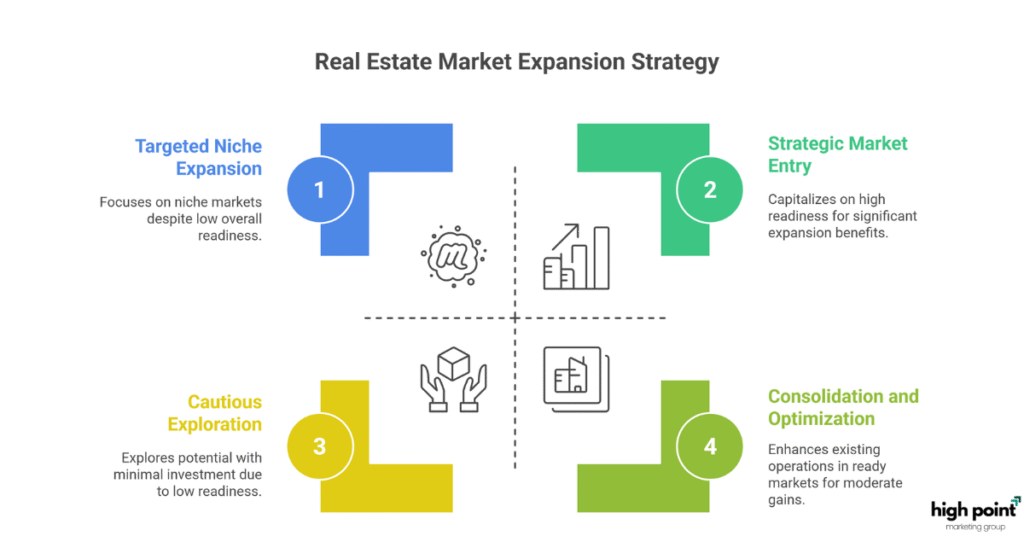
What Is a Real Estate Market Expansion Strategy?
A real estate market expansion strategy is a plan to grow a real estate business by entering new geographic areas or targeting new customer segments. It is often used during the expansion phase of the real estate cycle, when demand, property values, and job growth are rising.
Key elements include:
- Selecting the right market
- Conducting research
- Forming partnerships
- Diversifying across regions
This strategy helps investors maximize returns, grow their brand presence, and reduce risk through market diversification.
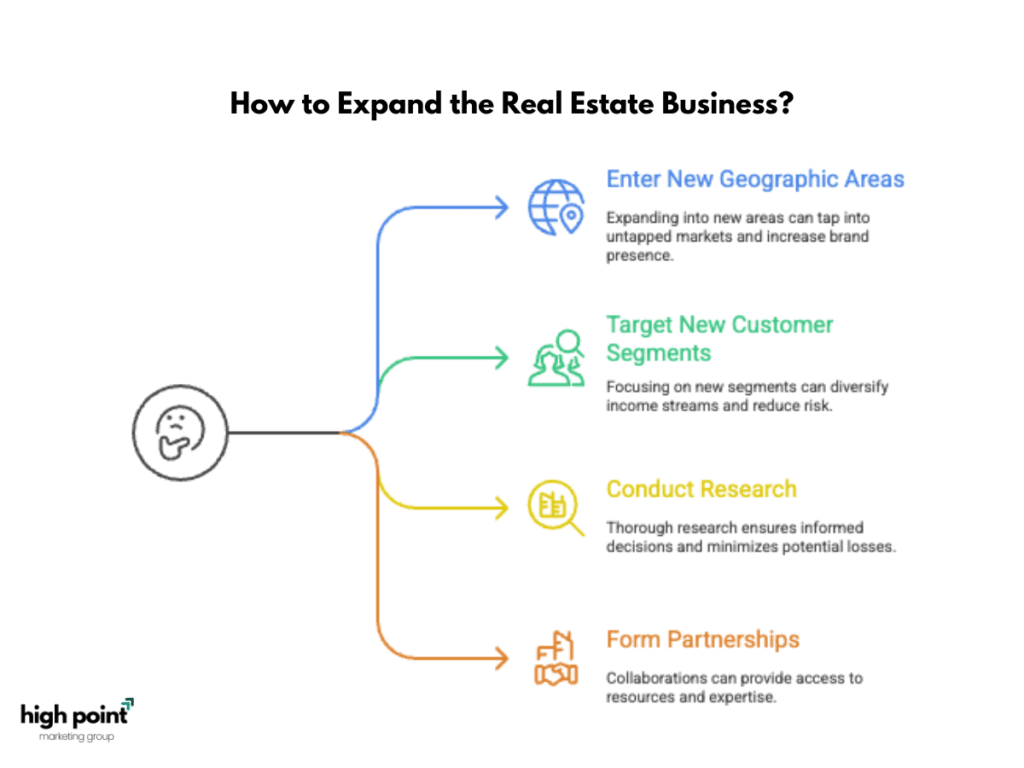
What research does successful market expansion require?
Successful market expansion requires comprehensive market research that aligns insights with your strategic goals. This research should uncover:
- Customer preferences, needs, and trends
- Local culture, buying behavior, and consumer habits
- Market demand, growth potential, and gaps
- Competition, barriers to entry, and regulatory factors
Key methods include:
- Surveys, interviews, and focus groups
- Use of tools like KDA, TURF analysis, and segmentation models
Effective research supports product development, entry strategy, and scaling, while ensuring your brand resonates locally and mitigates risk. It lays the foundation for identifying new opportunities and enhancing the chances of successful expansion.
Why is connecting with local partners essential for expansion?
Connecting with local partners is essential for expansion because they provide valuable local market knowledge, cultural insights, and help navigate legal and regulatory challenges. They reduce risks, speed up market entry, and boost brand trust and community engagement. Local partners offer established networks and resources, making operations smoother and more cost-effective. Overall, strong local partnerships enable faster adaptation, better customer connection, and sustainable growth in new markets.
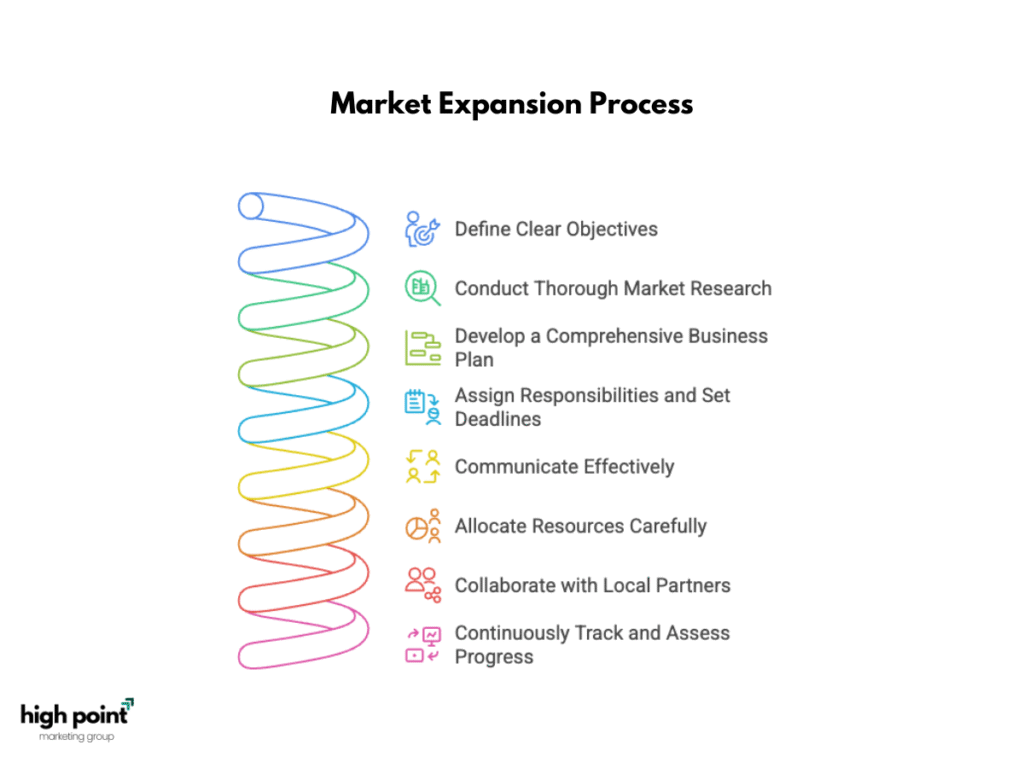
What are the key execution steps for expansion?
Key Execution Steps for Expansion
- Define Clear Objectives
Establish specific goals and desired financial outcomes to guide the expansion. - Conduct Thorough Market Research
Analyze the target market to understand risks, competition, and customer needs. - Develop a Comprehensive Business Plan
Tailor the plan with strategies, timelines, budgets, and actionable steps aligned to the market. - Assign Responsibilities and Set Deadlines
Break down the plan into manageable tasks with clear ownership and milestones to track progress. - Communicate Effectively
Share the strategy clearly with all stakeholders to ensure alignment and coordinated execution. - Allocate Resources Carefully
Plan labor, finances, and supplies to support operational needs during expansion. - Collaborate with Local Partners and Leverage Distribution Channels
Use local expertise and networks to streamline market entry and operations. - Continuously Track and Assess Progress
Monitor execution with data-driven insights, adapting plans as needed to address challenges and changes.
By following these structured yet flexible steps—planning, aligning, executing, and reassessing—businesses reduce risks, improve accountability, and accelerate successful expansion.
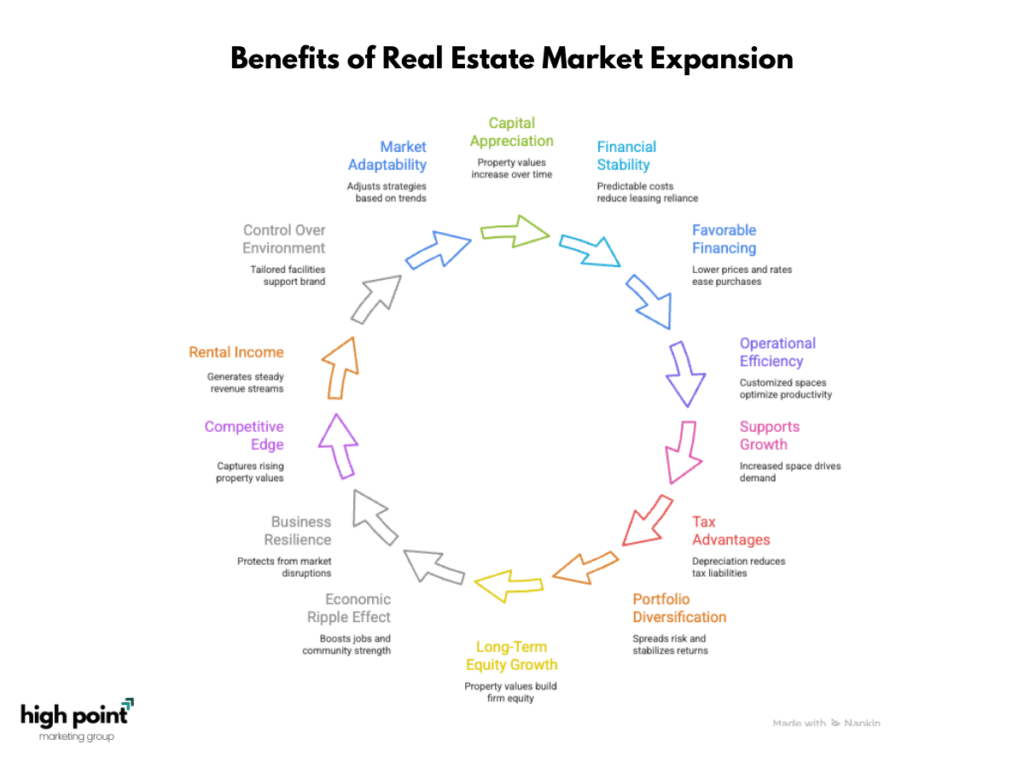
How Does Real Estate Market Expansion Benefit a Firm?
Real estate market expansion offers multiple strategic advantages that help firms grow, stabilize, and increase their value. Here are the key benefits:
- Capital Appreciation – Strategic property acquisitions increase a firm’s net worth over time.
- Financial Stability – Owning real estate reduces reliance on leasing, making costs more predictable.
- Favorable Financing – Lower prices and low interest rates during expansion ease property purchases.
- Operational Efficiency – Firms can customize spaces to optimize productivity.
- Supports Growth – Expanding firms need more space, driving demand for commercial properties
- Tax Advantages – Depreciation deductions help reduce tax liabilities.
- Portfolio Diversification – Real estate holdings spread risk and stabilize returns.
- Long-Term Equity Growth – Property values tend to grow, building firm equity.
- Economic Ripple Effect – Market growth boosts jobs and community strength, indirectly helping firms.
- Business Resilience – A flexible property portfolio protects firms from market disruptions.
- Competitive Edge – Early investment during expansion captures rising property values.
- Rental Income – Real estate can generate steady revenue streams.
- Control Over Environment – Ownership allows tailored facilities supporting brand and operations.
- Market Adaptability – Firms can adjust strategies based on real estate trends.
How does expansion lead to portfolio diversification?
Expansion leads to portfolio diversification by broadening a firm’s operations across new products, services, markets, and geographic regions. This strategic move reduces overall risk and enhances financial stability by spreading investments and business activities across different areas.
Key ways expansion drives diversification include:
- Entering New Markets or Products: Expanding into new products, services, or markets introduces fresh revenue streams and reduces dependence on existing ones, helping capture new opportunities and mitigate risks.
(Source: UK.COM, World Business Outlook) - Scaling Existing Operations vs. Diversifying: While expansion strengthens what already works, diversification specifically involves branching into new industries or markets, thus spreading risk.
(Source: Tech Help Canada) - Geographic Expansion: Moving into different geographic markets broadens exposure and materially reduces company risk by avoiding overreliance on a single location.
(Source: CEPR) - Portfolio Diversification in Real Estate: Expanding and diversifying commercial real estate holdings supports long-term growth and risk mitigation.
(Source: CRE Investor Coach) - Improved Financial Resilience: Increasing market share through expansion enhances a firm’s financial resilience and profitability, similar to the benefits of a diversified investment portfolio.
(Source: Greater Spokane Inc.) - Risk Reduction and Stability: Diversifying assets across sectors, industries, and regions minimizes losses from any one investment’s poor performance and improves portfolio stability.
(Source: Investopedia, Bankrate, NerdWallet) - Access to Growth Opportunities: Expansion opens doors to additional growth avenues and helps build a more resilient portfolio that can better withstand market volatility.
(Source: Range.com)
How does entering new markets increase brand authority?
Entering new markets boosts brand authority by expanding reach and building global recognition. It allows brands to tap into existing trust, increase visibility, and connect with new customers. Success relies on strong brand positioning, market research, and localized content that meets local needs. This builds credibility and establishes the brand as an industry expert, leading to better search rankings, more loyalty, and higher sales. Additionally, entering new markets diversifies revenue and strengthens overall brand stability.
How is technology used to scale expansion efforts?
Technology scales expansion by automating tasks, improving remote collaboration, and providing scalable software and cloud solutions. It uses AI and analytics for data-driven decisions and leverages network effects to reduce costs. Specialized tools keep operations efficient in new markets, enabling sustainable growth without proportionally increasing staff or infrastructure.
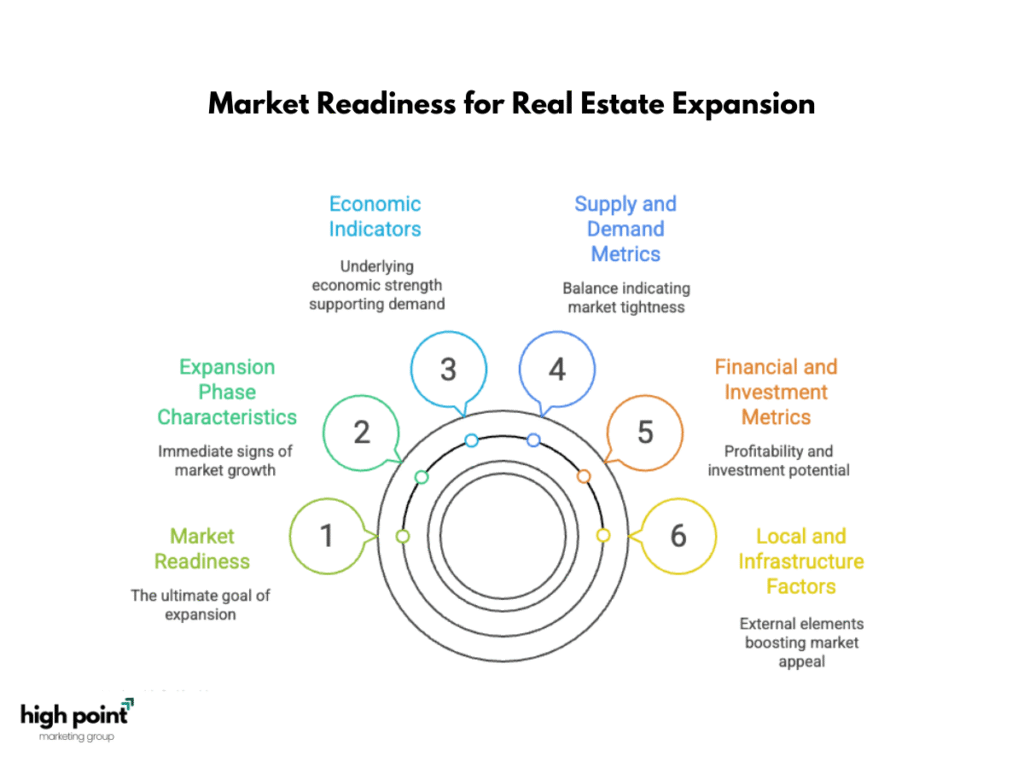
What Key Indicators Define a Market Ready for Real Estate Expansion?
A market ready for real estate expansion is defined by several key indicators that collectively signal growing demand, strong economic fundamentals, and favorable supply conditions. These indicators include:
1. Expansion Phase Characteristics:
- Increasing demand for real estate and rising property values.
- Upward trends in property sales and home prices.
- Positive market sentiment and strong investor confidence.
2. Economic Indicators:
- Rising employment rates and job growth boost housing demand.
- GDP growth reflects overall economic strength.
- High consumer confidence levels encourage real estate investment.
- Local economic development and the presence of thriving industries.
- Population growth or inbound migration increases housing needs.
3. Supply and Demand Metrics:
- Declining inventory levels and reduced months of supply indicate a tightening market.
- Decreasing Days on Market (DOM), showing faster property sales.
- Low vacancy rates, reflecting strong occupancy.
- Increased new construction and building permits signal market confidence.
4. Financial and Investment Metrics:
- Favorable capitalization rates (cap rates) and positive cash flow indicate profitability.
- Strong Return on Investment (ROI) and Net Operating Income (NOI).
- Healthy average commission per sale reflecting robust market activity.
5. Local and Infrastructure Factors:
- Proximity to popular attractions, event venues, and transportation infrastructure like airports and public transit.
- Ongoing infrastructure investments and development projects support growth.
- Seasonal peaks in traveler activity boost local demand.
6. Market Cycle Context:
- The expansion phase follows recovery and precedes the peak (hyper-supply) phase in the real estate cycle, marked by rising sales and prices.
Together, these indicators show a real estate market ready to expand, fueled by strong economic growth, rising demand, tight supply, and good investment prospects. Monitoring them helps investors find the best timing and locations for growth. More about Market Expansion Strategies & Planning
What External Factors Can Influence Real Estate Market Expansion?
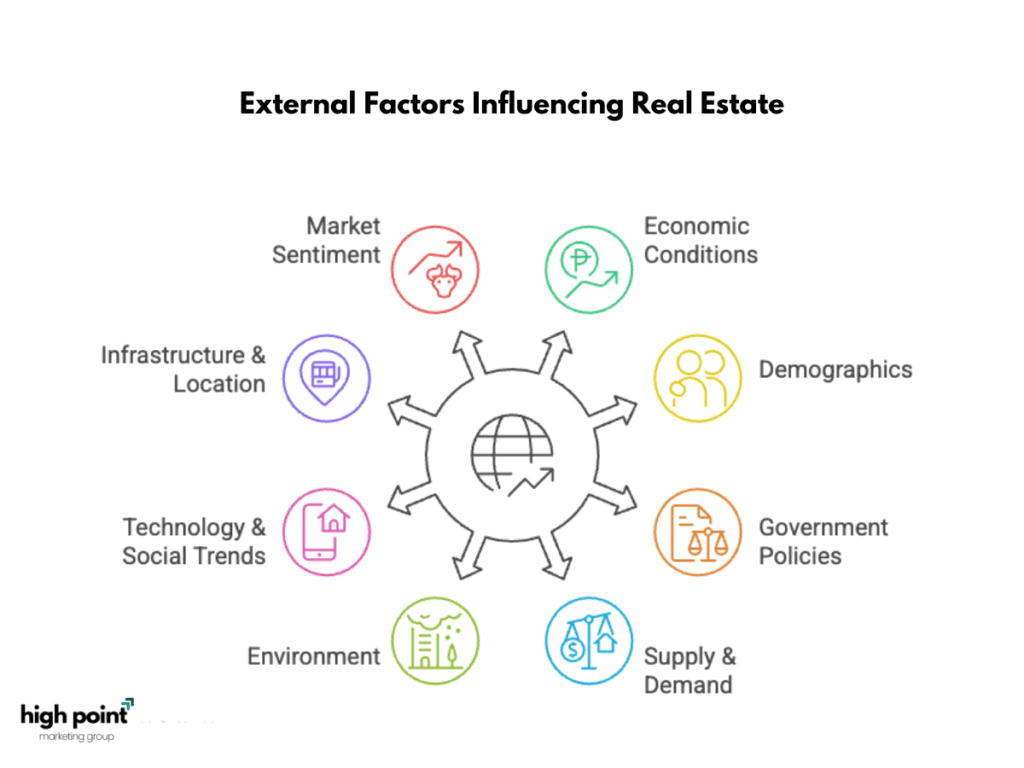
External Factors Influencing Real Estate Market Expansion
- Economic Conditions: Job growth, GDP, inflation, and interest rates impact demand and prices.
- Demographics: Population growth, migration, age, and income changes affect housing needs.
- Government Policies: Tax incentives, zoning laws, and regulations influence development and supply.
- Supply & Demand: Inventory levels, vacancy rates, and construction activity shape market trends.
- Environment: Climate, natural disasters, and local surroundings affect property values.
- Technology & Social Trends: Remote work and marketing innovations drive demand shifts.
- Infrastructure & Location: New transit, schools, and amenities boost market attractiveness.
- Market Sentiment: Investor confidence and economic uncertainty impact expansion phases.
These factors collectively drive real estate market growth by shaping demand, supply, pricing, and investment conditions.
How do economic trends impact the timing of expansion?
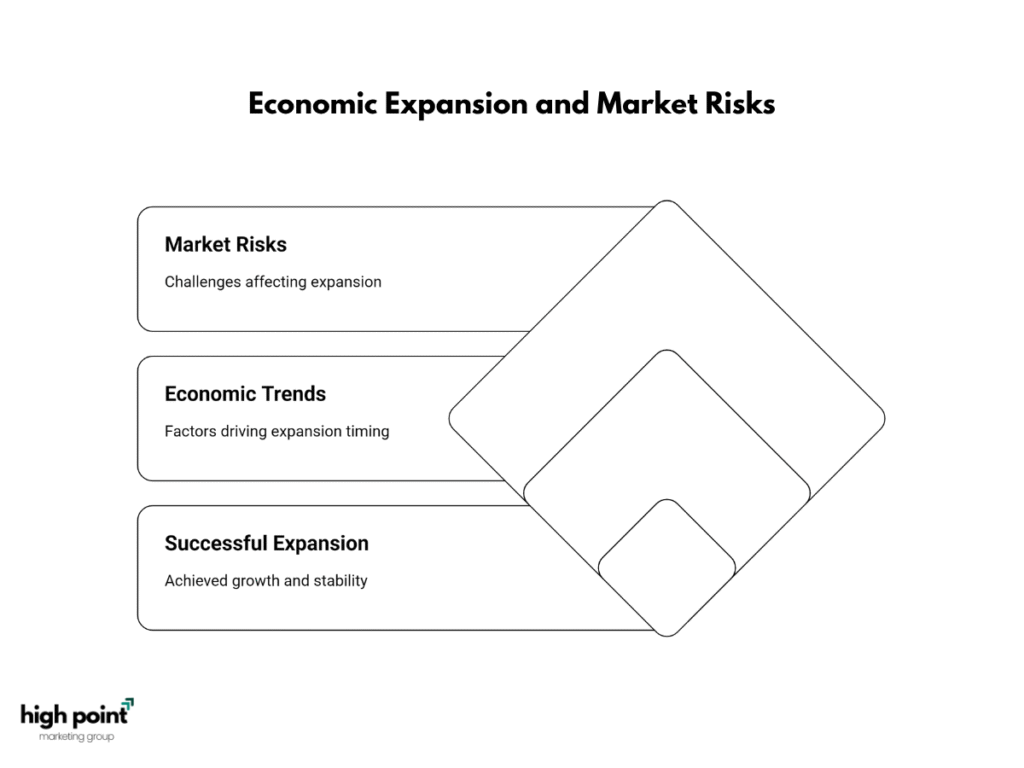
How Economic Trends Impact the Timing of Expansion
- Economic expansion starts with rising GDP, employment, and low interest rates, which boost borrowing and investment.
- Consumer confidence and credit availability increase, fueling growth.
- As expansion progresses, interest rates often rise, signaling potential slowdowns.
- Longer expansions are less likely to end abruptly.
- Global factors, inflation, and economic shocks can delay or shorten expansions.
- Businesses and investors respond by increasing production, sales, and funding during expansions.
In short, economic trends like growth, jobs, interest rates, and global conditions determine when expansions begin, how long they last, and their momentum.
What are the common risks that challenge market expansion?
Common Risks Challenging Market Expansion
- Cultural Differences: Misunderstandings in communication and norms.
- Political Instability: Uncertain and risky environments.
- Economic Volatility: Inflation and currency fluctuations.
- Regulatory Challenges: Complex local laws and compliance.
- Supply Chain Issues: Delays and labor shortages.
- Financial Risks: Limited capital and cash flow problems.
- Competition: Strong local and global rivals.
- Operational Risks: Poor growth management and conflicts.
- Reputational Risks: Damage to brand trust.
- Technology Risks: Cybersecurity and data challenges.
These risks affect strategy, operations, and finances, requiring careful management for successful expansion. Market Expansion Consulting Services
Should you consider international markets for real estate expansion?
Yes, considering international markets for real estate expansion can be a smart move. It offers portfolio diversification, higher return potential, and access to emerging market opportunities. Many global markets, especially in developing regions, provide better rental yields and early-mover advantages. Additionally, international investments can reduce risk tied to local downturns. However, success depends on understanding local laws, managing currency and political risks, and staying informed with the help of modern tools. When done carefully, international expansion can boost both stability and growth in your real estate portfolio.