


What Are Examples of a Brand Positioning Strategy?
Brand positioning is how a company makes its brand feel special and different to people. Brands do this by focusing on things like low prices, high quality, or being easy to use.
Ways to Position a Brand
Here are common ways brands stand out, with examples.
| Type of Positioning | What It Means & Who Does It |
| Against a Competitor | Being the opposite of the main competitor. Example: Apple 🍎 set itself apart from other PC makers with its “Think Different” idea. |
| Based on Price | Offering the lowest price or best value. Examples: AliExpress and Dollar Shave Club. |
| Based on Quality | Being known as the best quality or the safest option. Example: Volvo is known everywhere for being a very safe car. |
| Based on Convenience | Making things very easy for customers. Examples: Amazon for easy online shopping and Dollar Shave Club for home delivery. |
| Based on a Benefit | Showing a clear advantage that customers get. Example: Burger King’s “Have It Your Way” promises the benefit of choice. |
| Based on Lifestyle | Connecting the brand to a certain feeling or way of life. Examples: Nike’s “Just Do It” is about action, and Tesla is about a green future. |
| For a Customer Group | Focusing on what a specific group of people needs. Examples: Shopify helps businesses of all sizes, and IKEA offers cheap, useful furniture. |
| For a Specific Job | Helping people who have a particular job. Example: A service that advertises it can “help company tech leaders succeed.” |
What are the types of brand positioning strategies?
Brand positioning is how a company makes its brand look special in a customer’s mind. The main ways to do this focus on the customer, the product, or the competition.
Strategies Focused on the Customer
These plans are about the customer’s feelings and needs.
- Customer Service: Focuses on providing great help to customers.
- Convenience: Makes the product easy and fast to use.
- Lifestyle: Connects the brand to a certain way of living.
- Emotional: Tries to connect with a customer’s feelings.
- Customer-Centric: Centers on the needs of a specific group of people.
- Experience: Is all about the feeling of using the product.
Strategies Focused on the Product
These plans are about the product itself and what it does.
- Quality: Shows the product is well-made and lasts a long time.
- Price: Tries to be the cheapest option.
- Value: Offers a good mix of price and quality.
- Benefit: Focuses on the good results the product gives the user.
- Problem and Solution: Shows the brand as the best fix for a problem.
- Features: Points out special parts of a product that others don’t have.
- Innovation: Presents the brand as a leader with new ideas.
Strategies Focused on the Market
These plans define a brand by its place among other companies.
- Against a Competitor: Defines the brand by comparing it to a rival.
- Differentiation: Shows what makes the brand unique.
What famous brand positioning examples can you learn from?
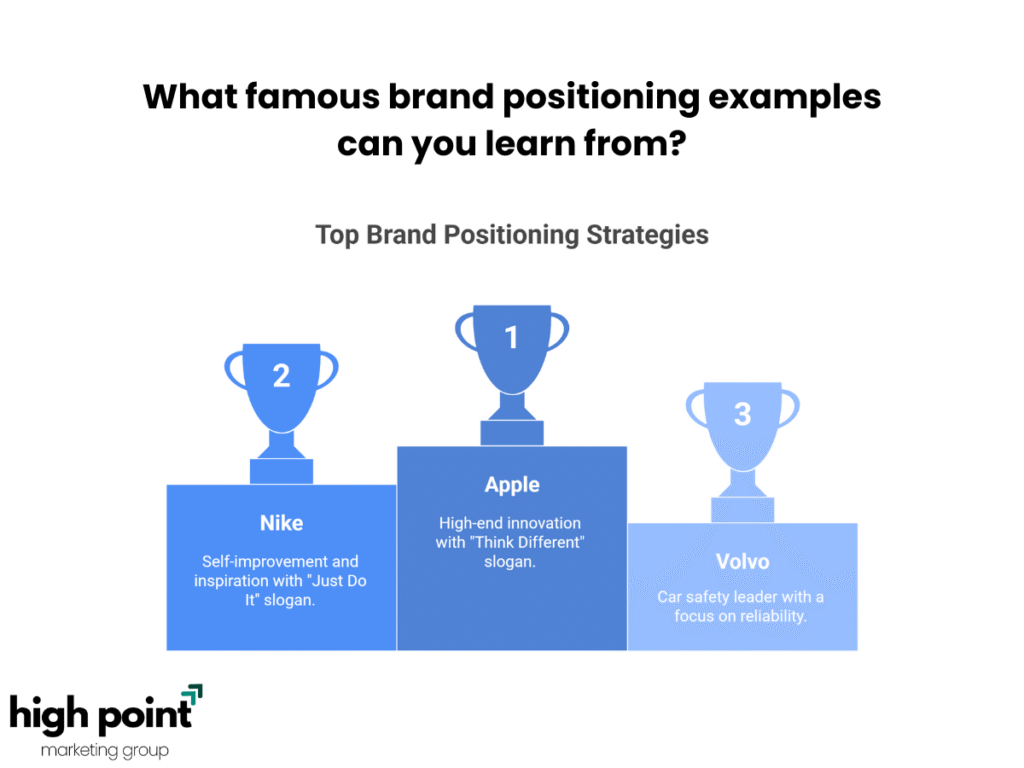
Famous brands show how a clear focus works. For example, Apple is known as a high-end and innovative brand, using its “Think Different” idea to stand out. In a similar way, Nike focuses on the idea of self-improvement and inspiration, which is captured in its famous “Just Do It” slogan. Some brands own a single word; for instance, when people think of car safety, they often think of Volvo.
Other brands position themselves around an experience or a value. Coca-Cola connects its brand to feelings of happiness and sharing. Starbucks offers a special, high-end coffee experience. On the other hand, Dollar Shave Club built its name on being cheap and easy to buy, while Tesla is known for its vision of a sustainable future. Airbnb is a key example of a brand that grew by facing challenges from its industry.
Many other companies are known for their clear brand positioning, including Amazon, Dove, IKEA, McDonald’s, Trader Joe’s, Patagonia, and Southwest Airlines.
How Is a Brand Positioning Strategy Defined?
A brand positioning strategy is a plan to create a clear, distinctive image of a brand in a customer’s mind. It’s about deciding how people will see your brand compared to others.
A good definition includes these four main ideas:
- A Spot in the Customer’s Mind. This is about creating a specific idea of your brand in people’s minds. The goal is to control how they see you.
- Being Different from Others. A key part of positioning is showing how your brand differs from competitors. It gives people a reason to choose you.
- Showing Your Unique Value. This means explaining what makes your brand special. It’s about clearly showing what your brand stands for and what its strengths are.
- A Planned Action. Positioning doesn’t happen by chance. It’s a planned process of actions taken to build a brand’s image and make it visible.
How is a brand positioning strategy created with a framework?
Creating a brand positioning strategy with a framework is a step-by-step plan. It’s a tool that helps you find the right place for your brand in the market and in a customer’s mind.
The process generally follows these steps.
Step 1: Learn About Your Market
First, you need to do some research to understand where you fit.
- Know your spot: Look at where your brand currently stands in the market.
- Know your customers: Understand who your target audience is and what they need or want.
- Know your rivals: Analyze your competitors to see what they do and how you can be different.
Step 2: Define What Your Brand Is
Next, you need to be clear about what your brand is all about.
- Find your purpose: Decide on your brand’s main purpose, values, and essence.
- Find what makes you special: Identify the unique things that set you apart from everyone else. This is your competitive advantage.
Step 3: Create Your Message
Finally, you put everything together into a clear message.
- Match your product: Make sure what you sell fits your brand’s new position.
- Write your main message: Create a clear value proposition and a positioning statement. This statement explains your brand’s unique place in the market for your target customer.
A finished framework will guide your marketing and usually includes your brand promise, key messages, and target audience.
How does a brand positioning statement capture your strategy?
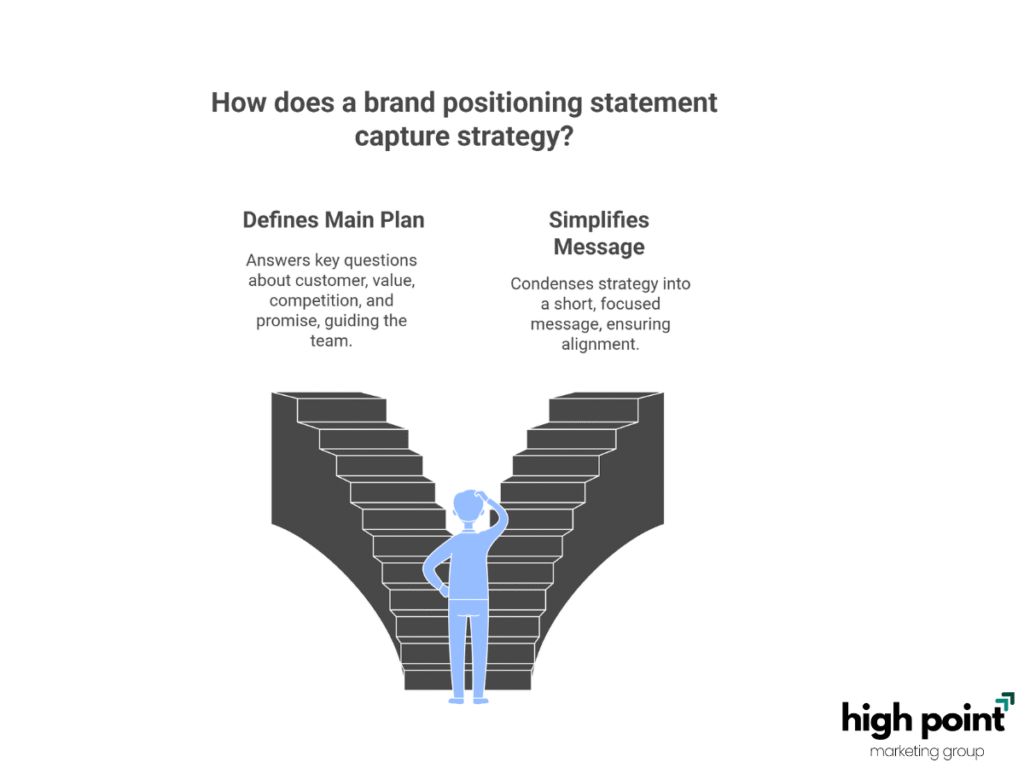
A brand positioning statement captures your strategy by first defining the main plan. It answers key questions about your business, including: Who is your customer? What is your unique value? How are you different from competitors? And what is your brand’s promise? By clearly stating these points, the statement acts as a guide for your team, like a “north star” or a map that gives direction for marketing and messaging decisions.
The statement also works by keeping the message simple. It takes your entire strategy and puts it into a short and focused message that captures the brand’s main idea. This ensures everyone in the company is aligned and working toward the same goal, connecting your brand’s identity directly to your business plan.
How Should You Optimize Your Brand Positioning Strategy?
First, you need to research your market. This means you should assess where your brand currently stands, understand your target customers and their needs, and analyze your competitors to see how you can be different. With this information, you can then define your ideal position by identifying your unique strengths and clarifying what makes your brand special.
Next, you must implement this strategy consistently. Create content and marketing messages that match your defined position, and use the right channels, like your website and social media, to reach your audience. Finally, optimization is an ongoing job. You should always monitor your brand’s performance and collect feedback from customers to find new ways to improve and strengthen your position in the market.
How do you analyze your current brand positioning?
To analyze your current brand positioning, you look at three main things: your own brand, your customers, and your competitors. This process shows you where you stand in the market.
Look at your brand
First, look inside your own company to see where you are now.
- Do a brand audit to check your performance.
- Review your brand identity, mission, and values.
- Use a SWOT analysis to find your strengths and weaknesses.
- Check your marketing and sales to see what is working.
Learn How Customers See You
Next, find out what your customers think about your brand.
- Use surveys and focus groups to ask people for their opinions.
- Read customer reviews and feedback online.
- Check social media to see what people are saying.
- Look at your current customer data.
Study Your Competitors
Finally, see how you compare to other brands in your field.
- Do a competitor analysis by looking at their websites and marketing.
- Create a chart to compare things like price and quality.
- Use a positioning map to see where your brand fits in the market.
How Does Marketing Leverage a Brand Positioning Strategy?
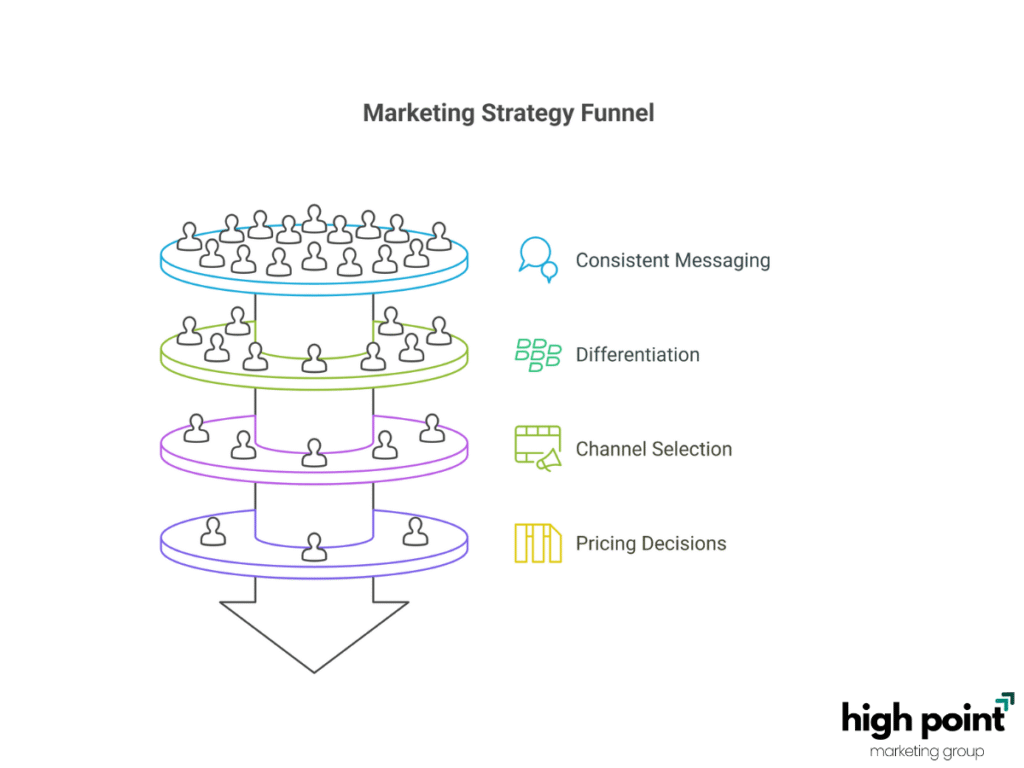
This strategy helps marketing guide its communications by creating consistent messages and brand stories for target customers. It focuses on showing how the brand is different from its competitors and what its unique value is.
The strategy also directs which marketing actions to take. It helps in choosing the right channels, like social media, and guides decisions on pricing. The main goal of these actions is to influence how customers see the brand, build their preference, and show the brand’s value.
What Is the Definition of Positioning in Marketing?
The main goal of positioning is to own a specific place in the customer’s mind. This is done by showing how your brand is different from competitors and highlighting what makes it unique. This isn’t random; it is a planned process where marketers decide on a special “niche” for the brand to fill in the market.
A famous definition comes from marketer Philip Kotler. He said positioning is the act of designing a company’s product and image to hold a distinct place in the mind of the target customer. For more structured approaches, see our Ansoff Matrix strategy guide
What is product positioning?
Product positioning is a planned process with a main goal: to own a special place in a customer’s mind. It’s about deciding how you want people to think and feel about your product.
This is done by showing how your product is different from competitors and communicating why it is valuable to a certain group of people. This means highlighting its unique features and the benefits it offers.
What Templates Are Used for Positioning Statements?
A common template for a positioning statement uses a simple fill-in-the-blank formula to build your core message. The most standard version looks like this:
For [Target Audience], [Your Brand] is the [Market Category] that provides [Unique Benefit].
This template helps you define the four main parts of your strategy. You must name your target audience, your brand itself, the market category you compete in (such as “running shoes” or “soda”), and most importantly, the unique benefit or promise that makes you different from others.
Should you use a marketing positioning template?
A template acts as a roadmap for your marketing. It guides you through the important steps, like analyzing your company and your competitors. It also helps you clearly state your unique value and identify your target customers.
Using a template helps make sure your plan is clear, which can help your product stand out in a busy market. It also helps get your team aligned on the same goals. Just remember that a template is a tool for strategic thinking and is not meant to be a final script for your public ads.