


What Are the Core Strategies for Franchisee Market Expansion?
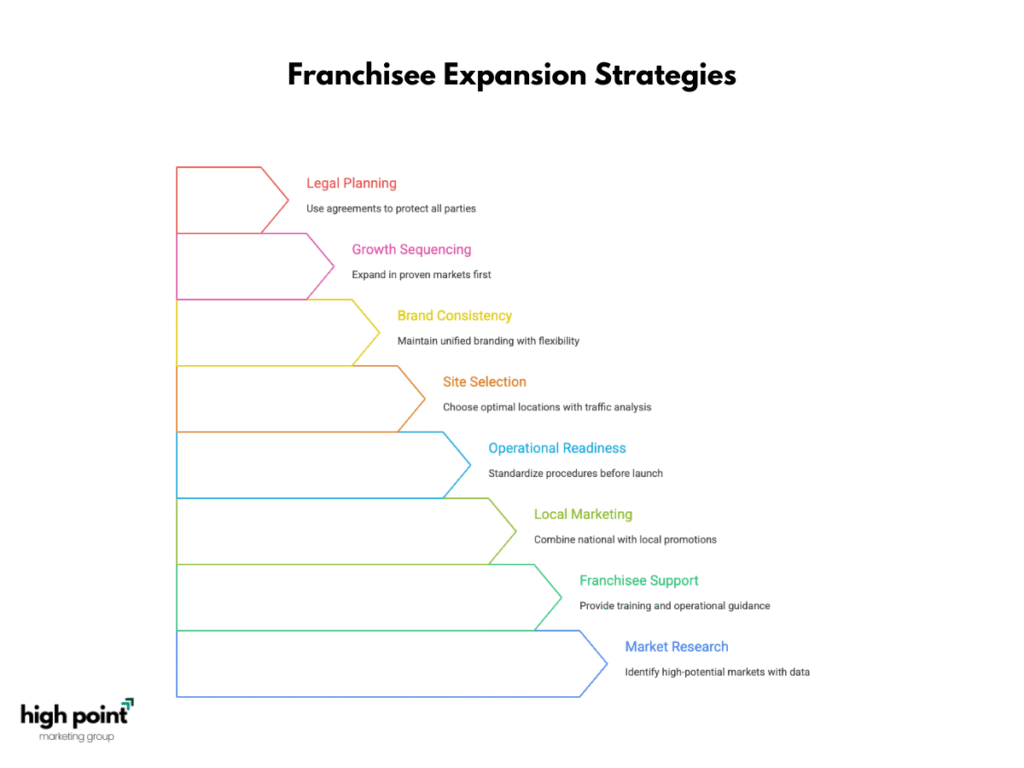
Franchisee expansion succeeds with a clear strategy, strong support, and market insight. Below are the core strategies:
Core Strategies
| Strategy | Key Insight |
| Market Research | Use data, demographics, and AI tools to find high-potential markets. |
| Franchisee Support | Provide training, marketing, and ongoing operational guidance. |
| Local + National Marketing | Combine national campaigns with geo-targeted local promotions. |
| Operational Readiness | Standardize procedures and ensure readiness before launch. |
| Site Selection | Use traffic and market analysis to pick optimal locations. |
| Brand Consistency | Keep branding unified while allowing local flexibility. |
| Growth Sequencing | Expand first in proven markets before entering new ones. |
| Legal Planning | Use clear agreements and licensing to protect all parties. |
Key Points
- Franchising enables rapid, low-risk expansion with franchisee investment.
- Success needs data-driven planning, brand consistency, and support.
- Begin growth where the brand is strongest.
How Can Franchisees Achieve Multi-Unit Growth?
Franchisees can grow by reinvesting profits, using SBA loans, or securing franchisor support. Success depends on scalable systems, strong teams, and choosing the right markets.
- Funding: Use profits, SBA loans, or franchisor aid.
- Operations: Build systems, train teams, and centralize processes.
- Market Selection: Expand into high-potential areas with development rights.
- Risk Management: Diversify across locations to reduce dependency.
- Support: Leverage franchisor training, marketing, and tools.
Fact: Multi-unit growth boosts brand reach, profitability, and attracts better financing.
What Is Involved in Franchise Territory Expansion?
Franchise territory expansion is a strategic legal process that defines specific geographic areas for franchisees to operate exclusively. It involves territory mapping using tools like postal codes or radius, legal agreements granting exclusive or master franchise rights, and close collaboration between franchisors and franchisees. Expansion includes market research, recruitment, and performance-based growth while complying with legal and regulatory requirements to protect investments and optimize market reach.
Should Franchisees Consider Multi-Brand Ownership?
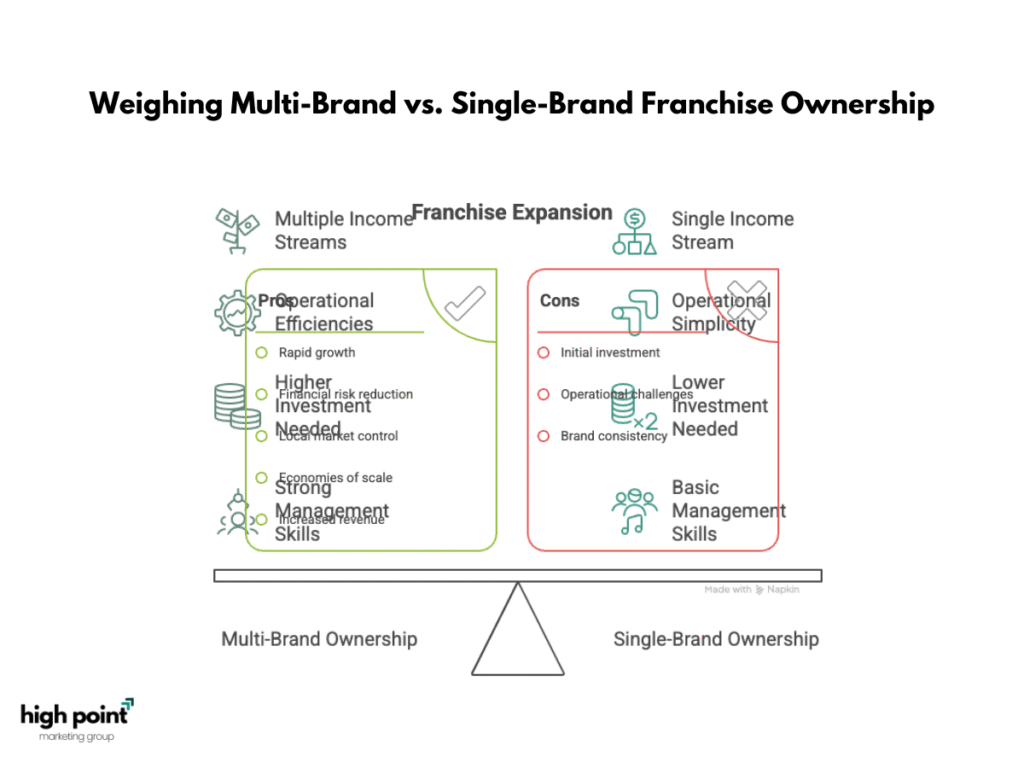
Multi-brand franchise ownership diversifies portfolios, reduces risk, and expands market reach by serving different customer segments. It offers benefits like:
- Multiple income streams and higher revenue
- Operational efficiencies via cross-training and shared best practices
- Economies of scale and strategic pricing
However, it requires more capital, experience, and strong management skills. Some franchisors may restrict multi-brand ownership. It also adds complexity and risk.
| Pros | Cons |
| Diversifies income | Higher investment needed |
| Expands customer base | Operational complexity |
| Improves efficiency | Possible franchisor limits |
Franchisees should evaluate legal permissions and their capacity before pursuing multi-brand ownership.
What Are the Main Benefits of Expansion for a Franchisee?
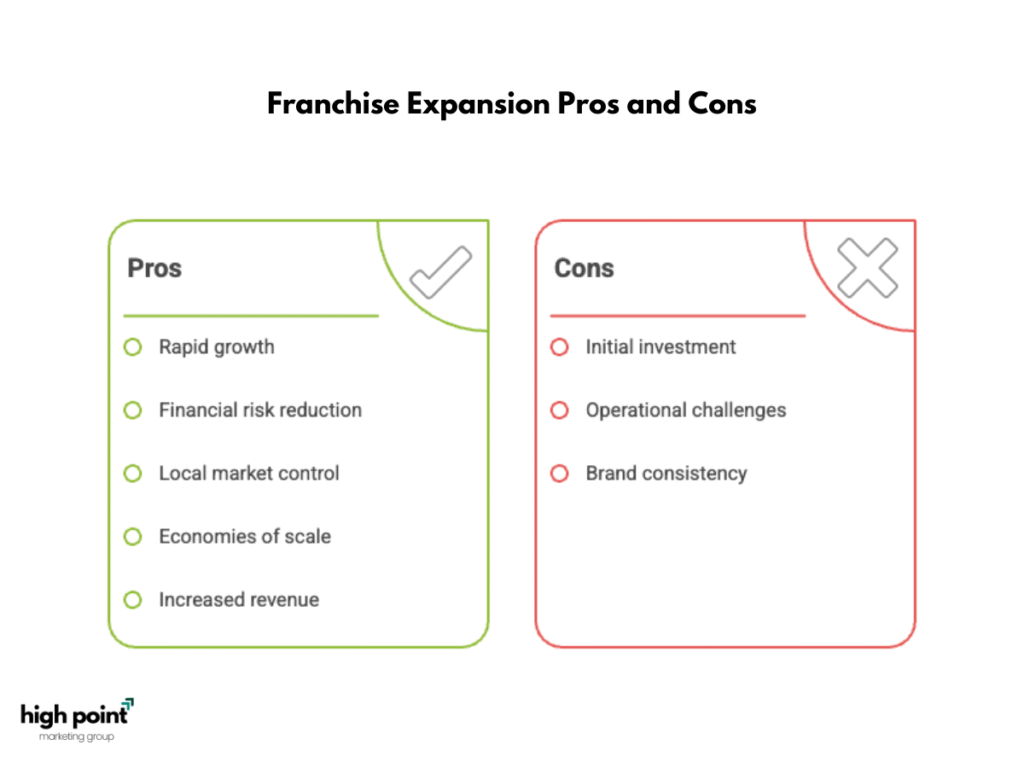
Franchise expansion enables rapid growth with lower capital investment by leveraging the franchisor’s established brand and support. It reduces financial risk since franchisees invest their capital and manage operations. Expansion provides local market control, economies of scale through shared marketing and bulk purchasing, and leads to increased revenue and profitability.
Additionally, it creates jobs and boosts local economies, balancing growth potential with risk management for sustainable success.
How Does Market Expansion Increase a Franchisee’s Profitability?
Market expansion grows a franchisee’s customer base and revenue while reducing costs through economies of scale and shared marketing. Multi-unit ownership and entering new markets create multiple revenue streams and boost profitability. Leveraging proven systems, local market knowledge, and franchisor support lowers risk and improves efficiency. Effective cost control and staff training further maximize profits, enabling scalable and sustainable growth.
What Operational Efficiencies Can Franchisees Gain?
Operational Efficiencies Franchisees Gain:
- Streamline operations and reduce errors using technology and automation.
- Use standardized processes and training for consistent quality and workflow.
- Benefit from bulk purchasing to lower costs.
- Outsource admin tasks to simplify operations.
- Leverage centralized cloud systems for better control and scaling.
- Monitor performance and KPIs for ongoing improvements.
These efficiencies improve profitability, maintain brand consistency, and support growth.
How Does Expansion Enhance a Franchisee’s Local Brand Presence?
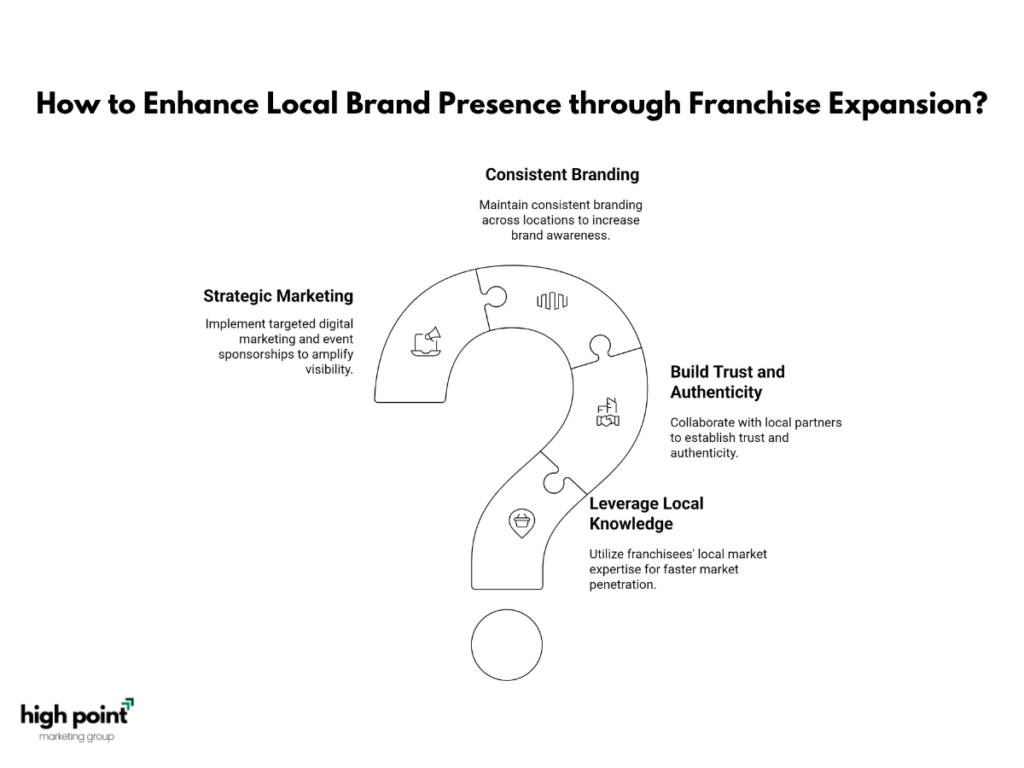
Franchise expansion boosts local brand presence by leveraging franchisees’ local market knowledge and networks, enabling faster market penetration across regions. Collaboration with local partners builds trust and authenticity, while consistent branding and strong marketing increase brand awareness. Sponsoring events and targeted digital marketing further amplify visibility and goodwill.
Facts: Franchisees provide capital and local insight, driving customer loyalty and rapid growth with less risk. Multiple locations enhance overall brand credibility and economic development.
In short, expansion blends local expertise with a proven brand, using strategic marketing and partnerships to grow and strengthen the franchise’s local presence.
What Are the Primary Challenges Franchisees Face During Expansion?
Primary Challenges Franchisees Face During Expansion
- Maintaining consistent brand standards and service quality across locations.
- High operating costs and reduced profit margins.
- Hiring and training the right staff.
- Limited control due to franchise agreements.
- Capital constraints and cash flow issues.
- Adapting to local market preferences.
- Navigating legal and regulatory compliance.
- Market saturation is limiting growth.
- Inflation is increasing operational costs.
- Cultural and regulatory hurdles in international expansion.
Key Points:
- Poor location and economic downturns risk closures.
- Franchise agreements reduce autonomy.
- Staffing shortages and high startup costs strain resources.
- Balancing franchisor control and franchisee independence is critical.
Effective planning, delegation, and market adaptation help overcome these challenges.
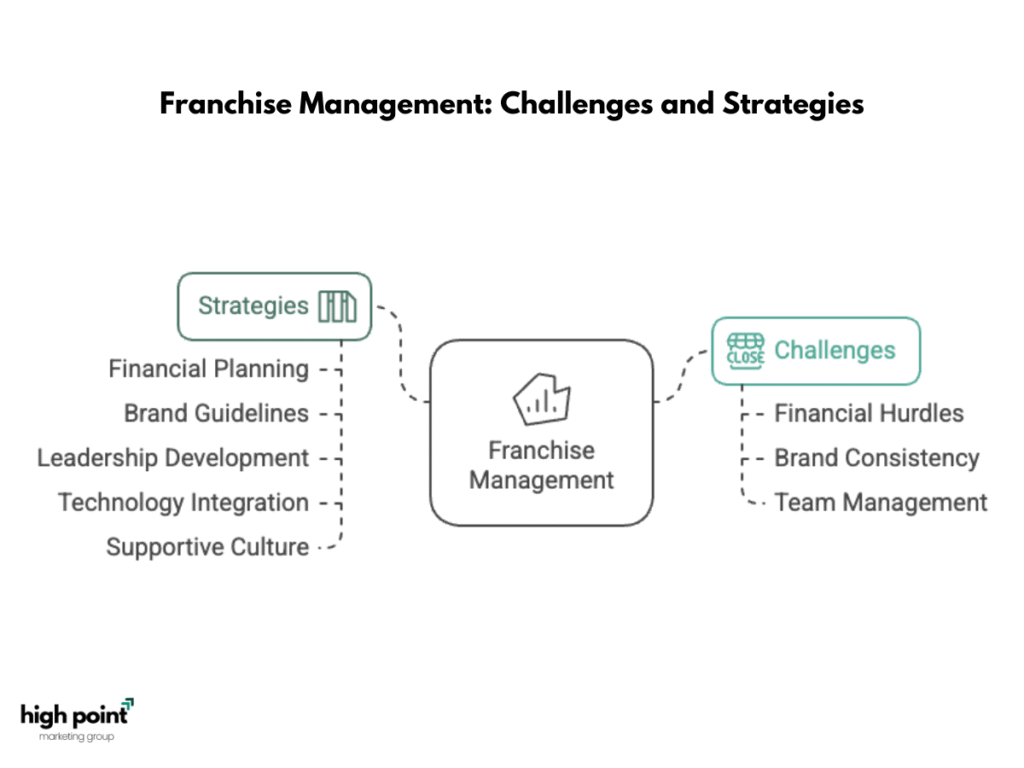
How Can Franchisees Maintain Brand Consistency?
Franchisees maintain brand consistency by following clear, detailed brand guidelines covering logos, colors, tone, and messaging. Ongoing training and use of pre-approved marketing materials ensure standards are met. Leveraging centralized digital platforms helps access up-to-date assets, while regular audits and feedback monitor compliance. Balancing brand standards with local adaptation allows relevance without losing identity. Strong communication and franchisor support reinforce a consistent customer experience across all locations, protecting brand reputation and loyalty.
What Financial Hurdles Should Franchisees Prepare For?
Franchisees face key financial challenges such as a high initial investment (fees, equipment, working capital), managing ongoing expenses (royalties, rent, wages, utilities), and maintaining strong cash flow. They must prepare a detailed budget and cash flow forecast for at least 36 months and set up an emergency fund for unexpected costs. Long approval processes and meeting franchisor credit and net worth requirements can delay startup and financing. Tracking all expenses carefully and planning for legal, tax, and hidden costs is crucial. Using financial advisors and thorough planning improves success chances.
How Can Franchisees Build a Team to Manage Multiple Units?
To manage multiple franchise units successfully, franchisees should:
- Build a Strong Leadership Team: Hire experienced managers to run daily operations independently.
- Develop Scalable Systems: Use standardized processes (SOPs) for consistent unit management.
- Delegate and Lead Strategically: Trust your team and focus on high-level strategy.
- Invest in Training: Provide targeted training and mentorship to grow team skills.
- Use Technology: Implement communication and management tools for oversight.
- Create a Supportive Culture: Motivate staff with clear goals and regular feedback.
| Strategy | Key Action |
| Leadership Team | Hire skilled managers |
| Scalable Systems | Standardize processes |
| Strategic Delegation | Trust team, focus on growth |
| Training & Mentorship | Build skills through programs |
| Technology | Use tools for communication and tracking |
| Supportive Culture | Motivate with feedback and alignment |
Building a trusted, trained team with clear systems and tech support enables franchisees to scale efficiently across multiple units.
What Advantages Does a Proven Franchise Model Offer to Franchisees?
A proven franchise model offers franchisees a higher chance of success by providing a tested business formula and an established brand that attracts customers. It includes initial training and ongoing support, helping franchisees operate smoothly. Centralized marketing, supply chain management, and technology tools reduce costs and improve efficiency. This model lowers financial risk and makes it easier to secure financing due to its strong track record. With standardized processes and economies of scale, franchisees benefit from consistent operations and cost savings. Overall, it gives a clear, structured path to business ownership with greater reliability and faster growth.
What Are the Disadvantages of the Franchise Model for a Franchisee?
Franchisees face high initial costs and ongoing fees, plus limited control over operations, branding, and creativity due to strict franchisor rules. Long-term, restrictive contracts limit flexibility and exit options. They depend heavily on the franchisor’s decisions and reputation, which can cause conflicts. Maintaining consistent standards and adapting to franchisor demands can be costly and challenging, restricting independence and growth.
How Do Franchisor Rules Limit a Franchisee’s Control?
Franchisor rules limit a franchisee’s control by requiring strict adherence to pricing, operational policies, and brand standards set by the franchisor. Franchisees must follow the franchisor’s business system, including approved suppliers, product offerings, and marketing strategies. They often cannot alter menus, change pricing independently, or hire freely due to contractual restrictions like exclusivity and “no-poach” clauses. Franchisors monitor compliance through inspections and have the right to reject unsuitable franchisees or transferees. While some laws limit excessive franchisor control, most power comes from the franchise agreement, which franchisees must follow to maintain brand consistency and protect trademarks.
What Ongoing Costs Can Impact a Franchisee’s Bottom Line?
Royalty fees: Usually 4% to 12% of gross sales, reducing profit.
Marketing fees: Typically 1% to 5% of sales for brand advertising.
Lease and real estate costs can significantly affect expenses.
Operational costs: Include labor, utilities, supplies, repairs, and maintenance.
Insurance and licensing: Ongoing fees for permits and coverage.
Cost of goods sold: Fluctuates with inventory and inflation.
Other fees: May include management, training, and local marketing fees.
Inflation impact: Rising prices for goods, labor, and insurance lower profits.
Financial risk: Ongoing costs combined with initial investment can strain cash flow. Market Expansion Strategies & Planning
Why Are Franchisees Essential to a Franchisor’s Growth?
Franchisees are essential because they invest capital, enabling cost-effective growth. They provide local market expertise, drive brand expansion, and reduce the franchisor’s financial and operational risk. Their success is directly tied to the franchisor’s growth, making them key to scaling efficiently.
How Do Franchisors Benefit From Franchisee-Led Expansion?
Franchisee-led expansion allows franchisors to grow with minimal capital, lower risk, and faster market reach. It creates steady revenue, improves brand visibility, and leverages motivated local owners for scalable success.