


What Defines a Product Diversification Strategy?
A product diversification strategy is a corporate growth plan for entering new markets with new products. It involves adding new offerings to a company’s portfolio to expand its business beyond its current scope.
Key Objectives
- Increase Profitability: To grow sales, revenue, and overall profits.
- Reduce Risk: To offset business risks and hedge against market uncertainty.
- Expand Reach: To capture new opportunities and attract new customers.
Implementation Methods
| Method | Description |
| New Offerings | Launching entirely new product lines, categories, or services. |
| New Markets | Entering new markets or industries. |
| Acquisition | Expanding by acquiring other businesses or investing in new ones. |
What are the types of product diversification strategies?
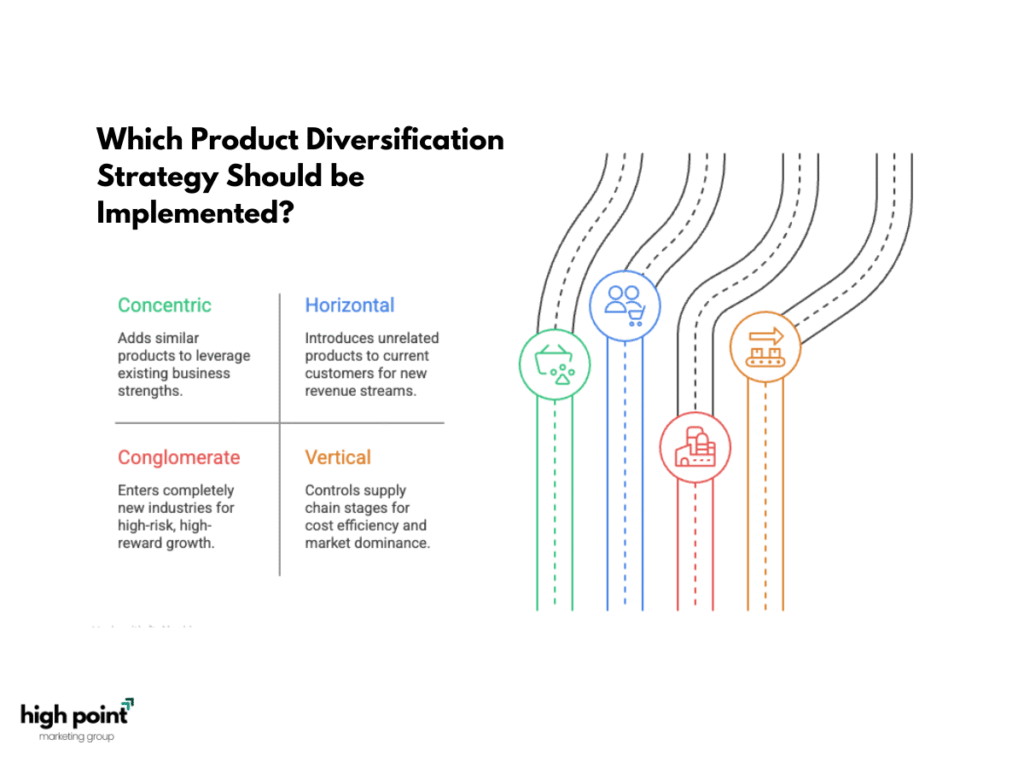
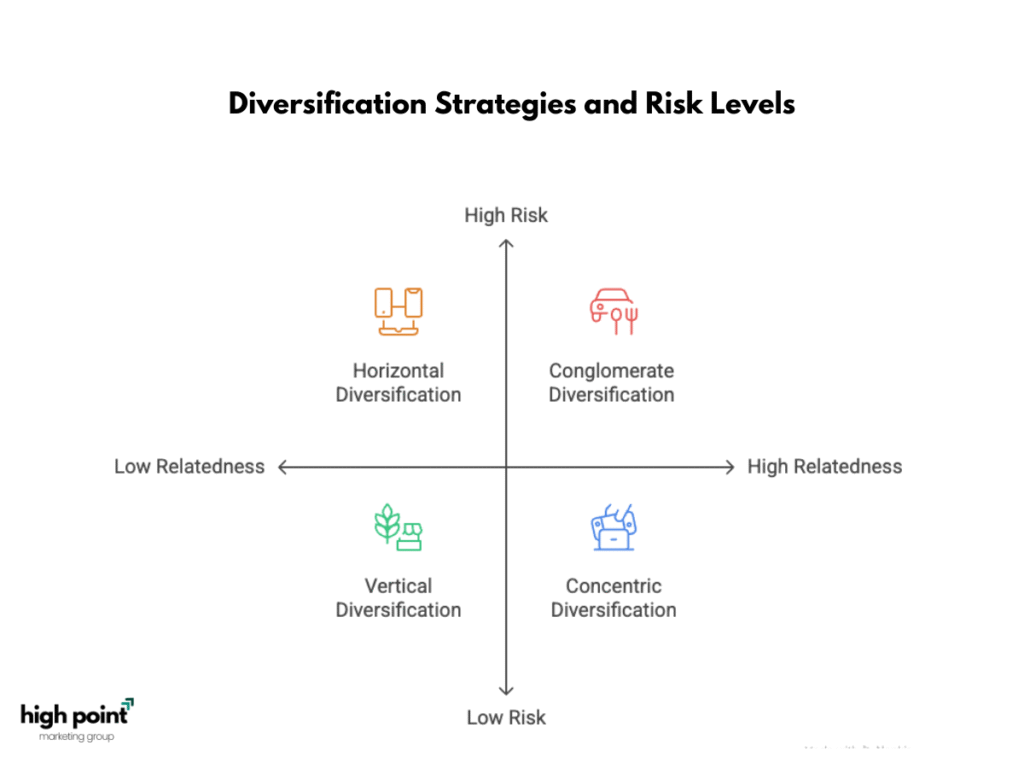
There are several types of product diversification strategies, with four primary methods being concentric, horizontal, conglomerate, and vertical diversification.
The four primary types of product diversification strategy are:
| Strategy Type | Description |
| Concentric | Adding new products that are similar or related to the existing business. |
| Horizontal | Adding new, unrelated products for the current customer base. |
| Conglomerate | Expanding into completely unrelated new products and industries. |
| Vertical | Taking control of different stages of the product’s supply chain. |
What is concentric diversification?
Concentric diversification is a low-risk growth strategy where a company adds new products or services that are related to its existing business by leveraging its current strengths.
- What It Is: Adding new, but similar or complementary, products to the existing business.
- How It Works: It uses the company’s existing technology, resources, and core competencies.
- Main Goal: To grow revenue while minimizing financial risk.
- Example: A company that makes desktop computers starts producing and selling laptops.
What is horizontal diversification?
Horizontal diversification occurs when a company decides to sell new, different products to its existing customers.
- What It Is: Adding new and unrelated items to what you already sell.
- Who It’s For: Your current, loyal customers.
- Why Do It: To grow the business and make it safer by not relying on just one product.
- Simple Example: A company that sells only mobile phones starts selling phone cases and headphones too.
What is conglomerate diversification?
Conglomerate diversification occurs when a company expands into a business that is entirely different from its current operations.
- What It Is: Owning businesses that have nothing in common with each other.
- Why Do It: To lower the company’s overall risk and find new ways to make money. If one business does poorly, another might do well.
- How It’s Done: Usually by buying other companies in completely different industries.
- Simple Example: A company that makes cars buys a company that makes pizza.
What is vertical diversification?
Vertical diversification is when a company takes over the other steps of making or selling its own product. The main goal is to have more control and save money.
It happens in two ways:
- Going Backward: The company buys its suppliers (the ones who provide its materials).
- Example: A pizza shop buys a farm that grows tomatoes.
- Going Forward: The company buys the sellers or distributors of its product.
- Example: The same pizza shop opens its own delivery service instead of using another company.
What Are the Advantages of a Product Diversification Strategy?
Selling different types of products helps a business in many ways:
- Make More Money: It creates new ways to earn money, leading to more sales and a steadier income.
- Be Safer: It’s less risky because you don’t rely on just one product. If one item doesn’t sell well, you have others that can.
- Reach More Customers: You can attract new people and expand into new markets.
- Beat Competitors: Offering more variety helps you stay ahead of other companies.
- Use Your Resources Better: You can make better use of your company’s skills and tools, which can help lower costs.
- Spur New Ideas: Trying new things encourages your company to be more creative and innovative.
What Are the Disadvantages of a Product Diversification Strategy?
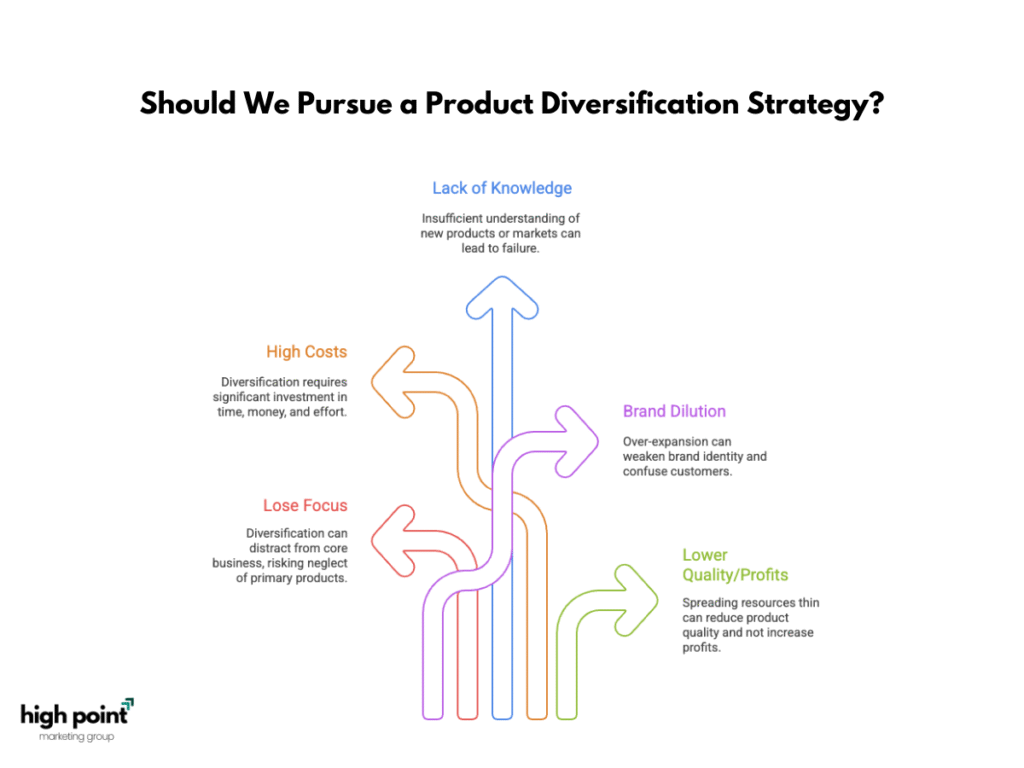
Selling many different types of products can be risky. Here are the main downsides:
- Losing Focus: The company can get distracted and neglect its main, most important business.
- Being Too Expensive and Difficult: It costs a lot of money, time, and effort. Managing many different things can get very complicated.
- Lack of Knowledge: The company might not know enough about the new products or markets to be successful.
- Hurting the Brand: Expanding too much can weaken the company’s main brand identity and confuse customers.
- Lower Quality or Profits: Spreading resources too thin can cause product quality to drop and might not lead to higher profits.
How Does Strategic Management Incorporate a Product Diversification Strategy?
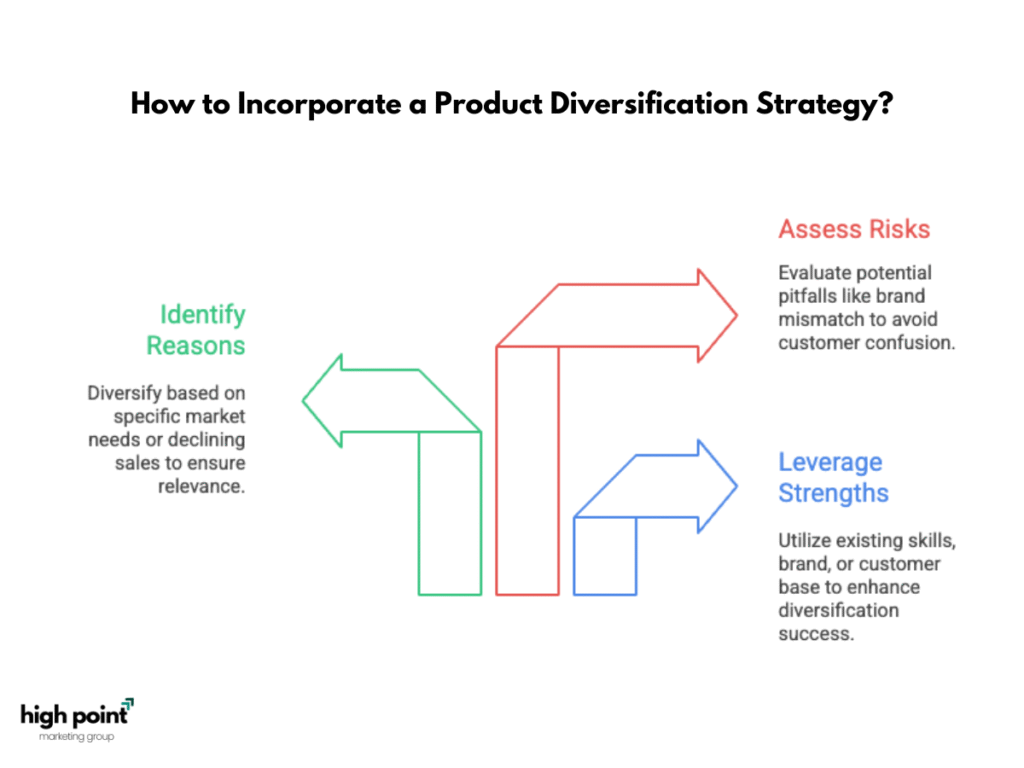
When company leaders decide to sell new types of products (diversify), they treat it as a major plan. Here’s how they think about it:
- They Use the Company’s Strengths: They start with what the company is already good at. This could be a special skill (like Honda’s great engines), a famous brand name (like Apple), or its loyal customers.
- They Have a Good Reason: They usually diversify for a specific reason, such as when sales of their main product are slowing down or because customers start wanting different things.
- They Check the Risks: Before starting, they think about what could go wrong. The biggest risk is creating a new product that doesn’t fit the brand’s image, which can confuse or upset customers (like a toothpaste company selling frozen dinners).
How does marketing define a product diversification strategy?
From a marketing point of view, product diversification is a plan to grow a business by selling new products, often to new customers.
Here’s how marketing sees it:
- The Main Goal: To increase sales and make more profit with new items.
- Who to Sell To: The strategy aims to reach new types of customers in different markets.
- How it Affects the Brand: It can make a brand look more innovative and able to meet more customer needs.
- Testing is Important: Marketers must test the new product to make sure people will want to buy it.
Note: This is different from “marketing channel diversification,” which means using more places (like social media, TV, and email) to advertise.
What is a marketing diversification strategy?
A “marketing diversification strategy” can mean two different things:
- Selling New Products (The Main Meaning): This is a plan for the whole company to grow by making new products and selling them in new markets. The main goals are to make more money and lower business risk.
- Using More Ad Channels (A Marketing Tactic): This is just for the marketing team. It means using many different ways to advertise (like Facebook, Google, and email) instead of relying on only one. This makes your marketing safer. Ansoff Matrix
Should You Consider Alternatives to a Product Diversification Strategy?
Yes, you should consider other options. Selling new products isn’t always the right move for every business.
Here’s a simple guide on when to choose:
Sell New Products (Diversify) if:
- Your main business is slowing down or has stopped growing.
- You want to make your business safer by not relying on just one thing.
Stick to Your Main Business (The Alternative) if:
- You can still grow by selling more of what you already make.
- You are not sure how to manage selling completely new things.
The main alternative to selling new products is to focus on what you already do best.
How does market diversification differ?
Market diversification strategies differ in several fundamental ways, including their core approach, their relationship to the existing business, their specific focus, and the context in which the term is used. Market Expansion for E-commerce and Retail
Here is a breakdown of how these strategies differ:
| Dimension of Difference | How the Strategies Vary |
| By Strategic Type | Strategies are classified into four main types: concentric (adding related products), horizontal (new products for current customers), vertical (controlling the supply chain), and conglomerate (entering a completely unrelated business). |
| By Relatedness | A key distinction is whether the new venture is related to the company’s current business (sharing technology, products, or markets) or unrelated (entering a new field). |
| By Strategic Focus | The focus can differ: Product Diversification adds new products/services, Market Diversification enters new industries or customer segments, and Geographical Diversification expands to new locations. |
| By Application Context | In business, diversification is a growth strategy using new products and markets. In financial investing, it is a risk management technique using different assets (like stocks and bonds) to reduce portfolio volatility. |
| Versus Expansion | Diversification differs from expansion. Diversification means branching into new and different areas, while expansion means scaling up and strengthening what a company already does. |